
Contents
Overview
The genesis of straight edge can be traced to the burgeoning hardcore punk scene in Washington D.C. during the late 1970s and early 1980s. Bands like Minor Threat, fronted by Ian MacKaye, found themselves reacting against the nihilism and substance abuse that had become commonplace in the punk movement. MacKaye's lyrics in the song "Straight Edge" (1981) articulated a desire for clarity and control, famously stating, "I'm a person with a straight edge." This sentiment resonated deeply with a segment of the scene, leading to the formation of a distinct subculture. Early adopters often used the 'X' symbol, originally a mark used in some clubs to signify underage patrons, as a badge of identity, reclaiming it to represent their commitment to abstinence. This movement was not merely about personal choice but also about challenging the dominant narratives of self-destruction within punk.
⚙️ How It Works
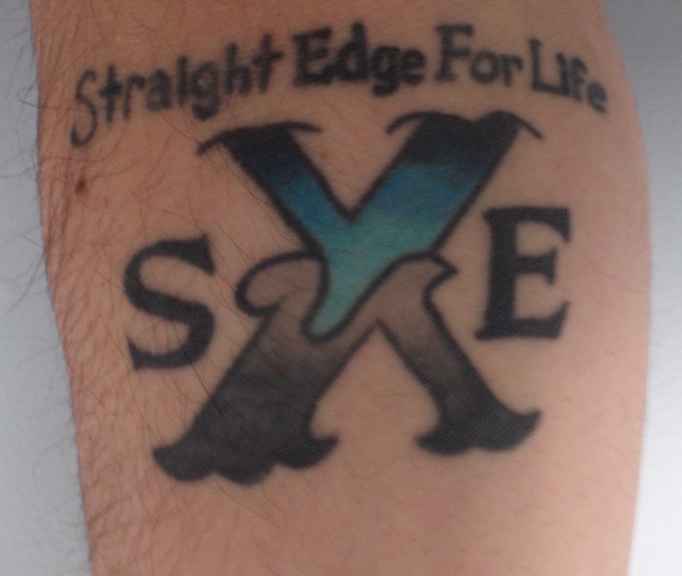
At its core, straight edge is a personal commitment to abstinence from specific substances and behaviors. The foundational pillars are the rejection of alcohol, tobacco, and recreational drugs. Beyond this, many adherents voluntarily extend their commitment to include abstaining from promiscuous sex, embracing vegetarianism or veganism, and avoiding caffeine. The 'X' symbol, whether tattooed, drawn on hands, or worn on clothing, serves as a visual signifier of this commitment. While there's no central governing body, the shared ethos creates a sense of community, often expressed through music, zines, and specific social circles within the broader punk and alternative scenes. The decision to live straight edge is typically framed as a conscious choice for personal empowerment and a rejection of societal norms that promote substance use.
📊 Key Facts & Numbers
While precise global numbers are elusive, estimates suggest that at its peak in the mid-1980s, a significant minority of the hardcore punk scene, perhaps 5-10% in certain cities like Washington D.C. and New York City, identified as straight edge. Today, while the overt presence might be smaller, the influence persists. Studies from the University of Wisconsin-Madison in the late 1990s indicated that individuals identifying with straight edge reported significantly lower rates of substance abuse compared to their non-straight edge peers. The 'X' symbol has appeared in an estimated 10,000+ tattoos globally, and countless zines and independent music releases have been dedicated to the philosophy since the early 1980s.
👥 Key People & Organizations
The most pivotal figure in the formation of straight edge is undoubtedly Ian MacKaye, the frontman of Minor Threat and Fugazi, whose song "Straight Edge" provided the movement's name and anthem. Other influential musicians who embraced or promoted the ethos include members of bands like Earth Crisis and Hatebreed. Organizations like Positive Force, a D.C.-based collective co-founded by MacKaye and Amy Ballard, served as early hubs for disseminating straight edge philosophy through zines and community organizing. Independent record labels such as Dischord Records played a crucial role in distributing music that championed the straight edge message.
🌍 Cultural Impact & Influence
The influence of straight edge has rippled far beyond the confines of the hardcore punk scene. It introduced a counter-narrative to the perceived excesses of youth culture, particularly within music scenes, and brought concepts like drug-free lifestyles and ethical consumption into mainstream discourse. Bands like Minor Threat and Earth Crisis inspired countless others, and the philosophy has been explored in various forms of media, from independent zines like Maximum Rocknroll to academic studies on subcultures. The association with vegetarianism and animal rights further broadened its cultural footprint, linking personal purity with broader ethical concerns about exploitation and environmentalism.
⚡ Current State & Latest Developments
In the 2020s, straight edge continues to exist as a subcultural identity, albeit less visibly than in its 1980s and 1990s heyday. Online communities and social media groups dedicated to straight edge remain active. New bands continue to emerge within the hardcore and punk scenes that identify with the ethos, often blending it with contemporary social and political concerns. The resurgence of interest in 1980s hardcore punk and the enduring appeal of DIY culture suggest that straight edge, while perhaps niche, is far from extinct. The ongoing dialogue about mental health and addiction also provides a contemporary lens through which the straight edge philosophy is re-examined.
🤔 Controversies & Debates
Straight edge is not without its controversies and internal debates. A significant point of contention has been the rise of more militant or aggressive factions, particularly in the 1990s, sometimes associated with vegan straight edge and animal liberation movements, which led to accusations of extremism and even violence. This contrasted sharply with the more pacifist and personal-choice-oriented origins championed by figures like Ian MacKaye. Disagreements also persist regarding the inclusion of other substances like caffeine or prescription medications, and the degree to which political activism should be integrated into the straight edge identity. The perception of straight edge as judgmental or self-righteous by outsiders has also been a recurring criticism.
🔮 Future Outlook & Predictions
The future of straight edge likely lies in its continued evolution as a personal philosophy rather than a rigid dogma. As societal attitudes towards substance abuse and mental health shift, the core tenets of self-control and clarity may find new relevance. We might see a greater emphasis on the mental and emotional aspects of abstinence, moving beyond just the physical avoidance of drugs and alcohol. The integration of straight edge principles with broader ethical frameworks, such as environmentalism and social justice, could also deepen its impact. However, the challenge remains in maintaining the movement's authenticity and avoiding the pitfalls of dogma or exclusivity that have plagued it in the past.
💡 Practical Applications
The most direct application of straight edge is as a personal lifestyle choice for individuals seeking to avoid alcohol, tobacco, and recreational drugs. This can be particularly relevant for those in recovery from addiction or those who wish to maintain peak physical and mental performance. Beyond personal adherence, the philosophy has influenced the creation of substance-free music venues and events within the punk and alternative scenes, providing safe spaces for attendees. Furthermore, the ethical extensions of straight edge, such as vegetarianism and veganism, have practical applications in dietary choices and consumer habits, encouraging more conscious and ethical living.
Key Facts
- Category
- movements
- Type
- movement