
Contents
Overview
Sustainability, in its broadest sense, is the capacity for an ecosystem, economy, or society to persist and thrive over extended periods. It fundamentally grapples with the interconnectedness of environmental health, economic development, and social justice, aiming to meet present needs without compromising the ability of future generations to meet their own. This complex interplay is often framed by the concept of sustainable development, which seeks pathways to achieve long-term ecological balance and human well-being. Key challenges include mitigating climate change, preserving biodiversity, and ensuring equitable resource distribution. The pursuit of sustainability influences decisions from global policy frameworks like the UN Sustainable Development Goals to individual consumer choices, driving innovation in areas like renewable energy and circular economy models.
🎵 Origins & History
The conceptual roots of sustainability stretch back to ancient philosophies that emphasized living in harmony with nature, evident in practices of indigenous communities worldwide and early thinkers like Plato who discussed resource limitations in his work 'Laws'. Modern discourse gained significant traction in the mid-20th century, spurred by growing awareness of industrial pollution and resource depletion. Sustainable development is defined as 'development that meets the needs of the present without compromising the ability of future generations to meet their own needs,' establishing a foundational framework for global environmental policy.
⚙️ How It Works
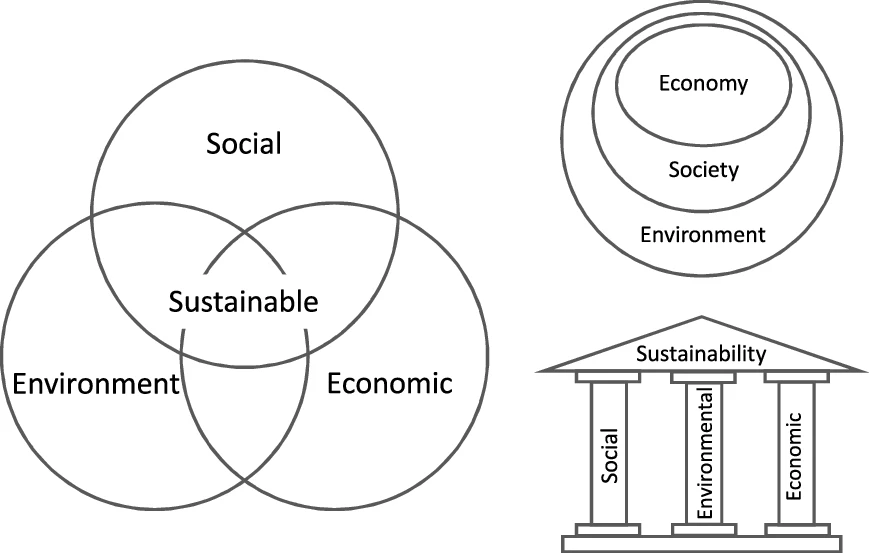
At its core, sustainability operates on a three-pillar model: environmental, economic, and social. The environmental pillar focuses on maintaining ecological balance, conserving natural resources like freshwater and forests, protecting biodiversity, and mitigating pollution and climate change. The economic pillar advocates for growth that is efficient, equitable, and environmentally sound, often through circular economy principles and green finance mechanisms, rather than linear 'take-make-dispose' models. The social pillar emphasizes equity, human rights, community well-being, and access to essential services like healthcare and education. These pillars are not independent but deeply intertwined; for instance, environmental degradation can disproportionately affect vulnerable communities, while economic policies can either exacerbate or alleviate environmental pressures.
📊 Key Facts & Numbers
The European Union Emissions Trading System is a regulation on carbon emissions. The ongoing development of artificial intelligence (AI) is also being explored for its potential to optimize resource management and monitor environmental changes, though concerns about its own energy footprint persist.
👥 Key People & Organizations
The debate around sustainability is multifaceted and often contentious. A primary controversy lies in the economic dimension: critics argue that stringent environmental regulations stifle economic growth and job creation, while proponents contend that sustainable practices foster innovation and long-term economic resilience. The concept of 'greenwashing'—where companies misleadingly market themselves as environmentally friendly—is a significant point of contention, eroding public trust. Furthermore, there is ongoing debate about the equitable distribution of the burdens and benefits of sustainability transitions, particularly concerning developing nations and marginalized communities who often bear the brunt of environmental damage but have fewer resources to adapt. The effectiveness and enforcement of international agreements also remain subjects of intense discussion.
🌍 Cultural Impact & Influence
The future outlook for sustainability hinges on accelerated global cooperation and technological innovation. Projections suggest that by 2050, the world could be powered by over 80% renewable energy if current trends continue and policy support strengthens. Innovations in carbon capture technologies, sustainable agriculture practices like vertical farming, and advanced materials science are expected to play crucial roles. The concept of a 'doughnut economy', which seeks to balance human needs within planetary boundaries, is gaining traction as a potential framework for future economic models. However, achieving these optimistic scenarios requires overcoming significant political inertia, vested interests in fossil fuels, and the substantial upfront investment needed for a global green transition.
⚡ Current State & Latest Developments
Sustainability principles are being applied across virtually every sector. In urban planning, cities like Copenhagen are implementing extensive cycling infrastructure and green building standards to reduce their environmental footprint. The food industry is seeing a rise in plant-based diets and sustainable sourcing initiatives, driven by consumer demand and concerns.
Key Facts
- Category
- philosophy
- Type
- topic