
Contents
Overview
The genesis of textile printing stretches back thousands of years, with the earliest evidence pointing to ancient civilizations in India and Egypt. India became a global hub for intricate block printing techniques, such as Kalamkari and Batik, which involved resist dyeing methods. By the Middle Ages, these techniques had spread along trade routes to Southeast Asia, the Middle East, and eventually Europe. The Industrial Revolution in the 18th and 19th centuries brought about significant mechanization. The Industrial Revolution era also saw the rise of chemical dyes, replacing traditional natural pigments and expanding the color palette available to printers. The development of screen printing in the early 20th century, initially for stenciling, revolutionized the industry by allowing for more complex designs and a wider range of applications.
⚙️ How It Works
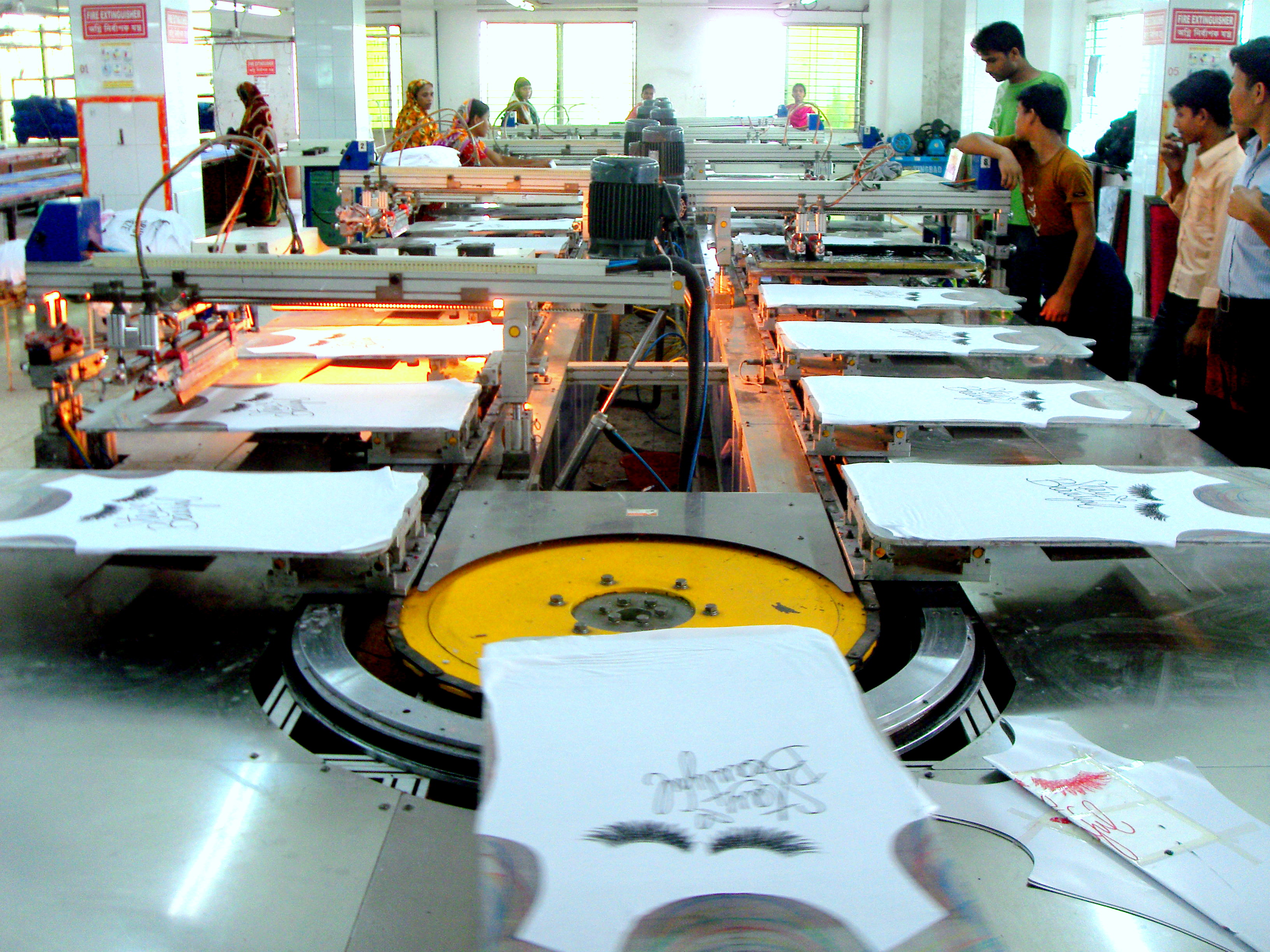
At its heart, textile printing involves applying a thickened colorant paste to fabric in a controlled manner. The colorant paste is formulated with dyes or pigments, a thickening agent (like alginates or gums), and other auxiliaries to achieve the desired viscosity and stability. This prevents the color from spreading beyond the intended design boundaries due to capillary action. Different printing methods employ various tools for application: block printing uses carved blocks pressed onto the fabric; screen printing utilizes porous screens with specific areas blocked off to allow color to pass through; rotary printing employs engraved metal cylinders that roll the design onto the fabric; and digital printing uses inkjet technology to precisely deposit ink onto the substrate. After application, the fabric typically undergoes a steaming or curing process to fix the color, followed by washing to remove excess paste and achieve the final, durable print.
📊 Key Facts & Numbers
Digital textile printing is experiencing explosive growth. The apparel sector accounts for the largest share of printed textiles, consuming over 60% of production, followed by home furnishings at around 25%. Asia-Pacific, particularly China and India, dominates global textile production and printing, accounting for over 50% of the market share.
👥 Key People & Organizations
Numerous individuals and organizations have shaped the landscape of textile printing. William Morris, a prominent figure in the British Arts and Crafts movement, championed hand-block printing and natural dyes. Thomas Bell's invention of the roller printing machine was a watershed moment. More recently, companies like Epson and HP have been at the forefront of developing advanced digital textile printing technologies. Organizations such as the Society of Dyers and Colourists and the Textile Institute play crucial roles in advancing research, education, and standards within the textile industry, including printing. The FESPA is a major international trade show that showcases the latest innovations in printing technologies, including textile applications.
🌍 Cultural Impact & Influence
Textile printing has profoundly influenced global culture, serving as a primary vehicle for artistic expression, storytelling, and identity. From the vibrant Kente cloths of Ghana, woven with symbolic patterns, to the elaborate Paisley motifs that became a fashion staple in the West, printed textiles have communicated social status, religious beliefs, and historical narratives. In the fashion world, designers like Vivienne Westwood have used bold, often politically charged prints to make statements. Beyond fashion, printed textiles are integral to interior design, from the iconic William Morris wallpapers and fabrics to contemporary upholstery and drapery. The accessibility of printing technologies has also democratized design, allowing for greater personalization and the rise of independent textile artists and small-batch producers.
⚡ Current State & Latest Developments
The textile printing industry is currently undergoing a significant digital transformation. Innovations in ink formulations, particularly eco-friendly water-based and pigment inks, are reducing the environmental footprint of printing processes. Automation and AI are increasingly being integrated into workflows for design creation, color matching, and production management. Companies like Kornit Digital and EFI Reggiani are leading the charge with advanced machinery and software solutions. The rise of e-commerce platforms has also fueled a demand for on-demand printing services, enabling consumers to create personalized textiles.
🤔 Controversies & Debates
Traditional printing methods can lead to substantial water pollution and waste generation. The use of per- and polyfluoroalkyl substances (PFAS) in some printing formulations has raised health concerns due to their persistence in the environment and potential toxicity. While digital printing offers a more sustainable alternative by reducing water consumption and waste, the energy required for printing and curing processes, as well as the disposal of ink cartridges and waste materials, are still areas of concern. Debates also persist around the ethical sourcing of materials and labor practices within the global textile printing supply chain, particularly concerning fast fashion production.
🔮 Future Outlook & Predictions
The future of textile printing is poised for further integration of digital technologies and a stronger emphasis on sustainability. Expect to see continued advancements in 3D printing for textiles, enabling the creation of complex, integrated structures and functional fabrics. The development of biodegradable inks and dyes derived from renewable resources will become increasingly crucial. Furthermore, the use of blockchain technology to ensure transparency and traceability in the supply chain, from raw material to finished product, is likely to grow. Personalized and on-demand printing will become even more prevalent, catering to individual consumer preferences and reducing overproduction. The industry will likely see a convergence of digital design tools, automated production, and advanced material science, pushing the boundaries of what's possible with printed textiles.
💡 Practical Applications
Textile printing finds application across a vast spectrum of industries. In the fashion industry, it's used for everything from haute couture garments and everyday apparel to accessories like scarves and ties. The home furnishings sector utilizes printing for curtains, upholstery, bedding, and carpets. Technical textiles also benefit from printing, with applications in areas like automotive interiors, medical textiles (e.g., printed wound dressings), and protective clothing. The signage and graphics industry employs textile printing for banners, flags, and displays. Furthermore, the burgeoning field of personalized gifts and promotional merchandi
Key Facts
- Category
- technology
- Type
- topic