
Contents
Overview
The Underground Railroad was a clandestine network of secret routes and safe houses used by enslaved African Americans to escape to free states and Canada. Operating between the late 18th century and the Civil War, this informal but highly organized system relied on abolitionists, free Black communities, and sympathetic individuals to provide shelter, food, and guidance. Its existence and the bravery of those who participated, both fugitives and 'conductors,' represent a profound act of resistance against the brutal institution of chattel slavery in America.
🎵 Origins & History
The roots of the Underground Railroad stretch back to the earliest days of slavery in North America. Abolitionist societies formed in Northern states like Pennsylvania and New York. The network grew significantly in the decades leading up to the Civil War. Key precursors included individual runaways and small, ad hoc groups who aided them, laying the groundwork for the more expansive system that would emerge.
⚙️ How It Worked
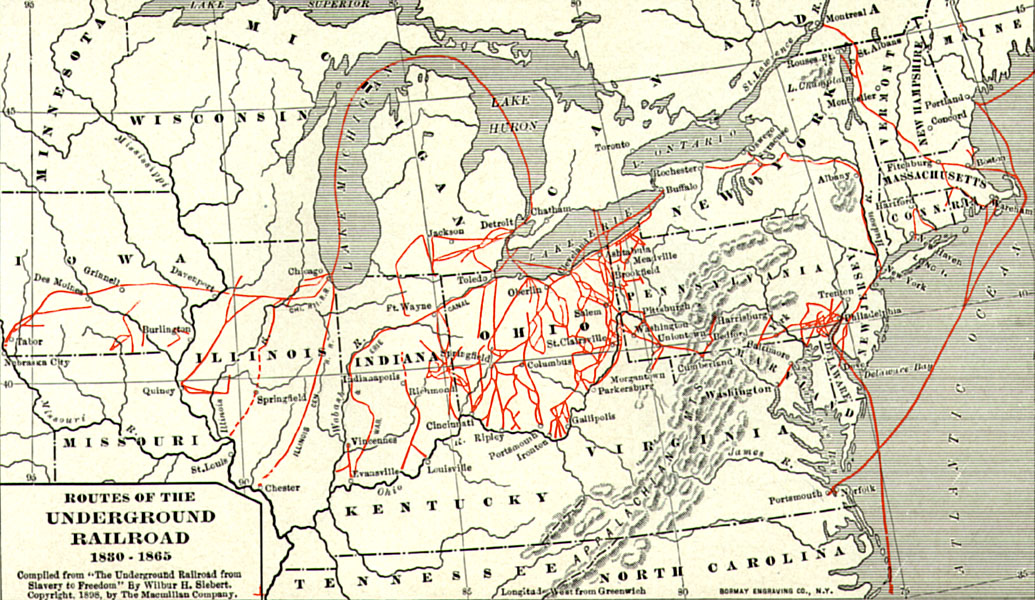
The Underground Railroad operated through a sophisticated system of coded language, secret signals, and trusted intermediaries. Enslaved individuals, often referred to as 'passengers' or 'freight,' would typically travel at night, guided by 'conductors' along predetermined routes. These routes utilized natural features like rivers and forests, as well as man-made paths and roads, leading to 'stations'—safe houses often located in the homes of abolitionists, churches, or barns. At these stations, fugitives could rest, eat, and receive new instructions before continuing their journey north. The routes were fluid and adapted to changing circumstances, with destinations ranging from free states in the North to Canada, where slavery had been abolished.
📊 Key Facts & Numbers
While precise figures are impossible to confirm due to the clandestine nature of the operation, the journeys often covered hundreds of miles. The cost of aiding fugitives was significant for abolitionists, with some estimates suggesting that the economic value of enslaved people who escaped represented millions of dollars in lost 'property' to slaveholders. Over its active period, the network involved an estimated 3,000 to 4,000 'conductors' and 'station agents' across numerous states.
👥 Key People & Organizations
Numerous individuals and organizations played pivotal roles in the Underground Railroad. Harriet Tubman, herself an escaped slave, became one of its most famous 'conductors.' William Still meticulously documented the stories of hundreds of fugitives who passed through his care, creating an invaluable historical record. Other key figures include Frederick Douglass, who escaped slavery and became a leading abolitionist orator and writer, and Levi Coffin, a Quaker abolitionist often called the 'President of the Underground Railroad.' Organizations like the American Anti-Slavery Society provided crucial support and advocacy.
🌍 Cultural Impact & Influence
The Underground Railroad has left an indelible mark on American culture and consciousness, symbolizing courage, resistance, and the enduring human desire for freedom. Its stories have inspired countless books, films, songs, and artworks, becoming a potent metaphor for overcoming oppression. The bravery of those who participated, both the fugitives risking everything and the 'conductors' defying unjust laws, continues to resonate. It serves as a powerful reminder of the human cost of slavery and the moral imperative of fighting for justice, influencing narratives around civil rights and social activism for generations. The very concept of the 'Underground Railroad' has become synonymous with covert, life-saving operations.
⚡ Current State & Latest Developments
While the Underground Railroad as a historical phenomenon concluded with the end of the Civil War and the abolition of slavery in 1865, its legacy continues to be explored and commemorated. Numerous historical societies, museums, and preservation efforts are dedicated to mapping its routes and honoring its participants. Scholars continue to uncover new details through archival research, and digital mapping projects aim to visualize the complex network. Contemporary discussions about historical memory, reparations, and the ongoing struggle for racial justice often reference the Underground Railroad as a foundational narrative of Black resistance and resilience in America.
🤔 Controversies & Debates
The primary controversy surrounding the Underground Railroad centers on the precise scale and organization of the network, with some historical accounts differing on the degree of centralized control versus localized, independent efforts. The Fugitive Slave Act of 1850, which mandated the return of escaped slaves and imposed penalties on those who aided them, also generated significant legal and ethical debates, pitting federal law against moral conscience. Furthermore, the romanticized portrayal of the Railroad in popular culture sometimes overshadows the immense risks and brutal realities faced by fugitives, leading to discussions about historical accuracy versus inspirational narrative. The very definition of 'success' for the Railroad is debated: was it the number of escapes, or the act of defiance itself?
🔮 Future Outlook & Predictions
The future of understanding the Underground Railroad lies in continued archival research, advanced digital mapping technologies, and a deeper engagement with the oral histories and descendants of those involved. As new documents are discovered and digitized, scholars will be able to refine our understanding of its routes, key figures, and operational methods. There's also a growing movement to preserve historical sites associated with the Railroad, ensuring that these tangible links to the past are protected for future generations. The ongoing dialogue about systemic racism and historical injustice will likely continue to draw upon the narrative of the Underground Railroad as a testament to the struggle for freedom and equality.
💡 Practical Applications
The Underground Railroad itself was a practical application of resistance against an oppressive system. Its 'stations' and 'routes' were real-world applications of clandestine logistics and human networks designed for survival. While not a 'technology' in the modern sense, its methods of communication, navigation, and secure transport were highly effective for their time. The principles of operating in secret, utilizing safe houses, and relying on trusted networks are concepts that have been echoed in various resistance movements throughout history, from wartime espionage to modern-day human rights advocacy. The documentation efforts by individuals like William Still also represent a crucial application of historical record-keeping in the face of attempts to erase Black history.
Key Facts
- Category
- history
- Type
- movement