
Contents
Overview
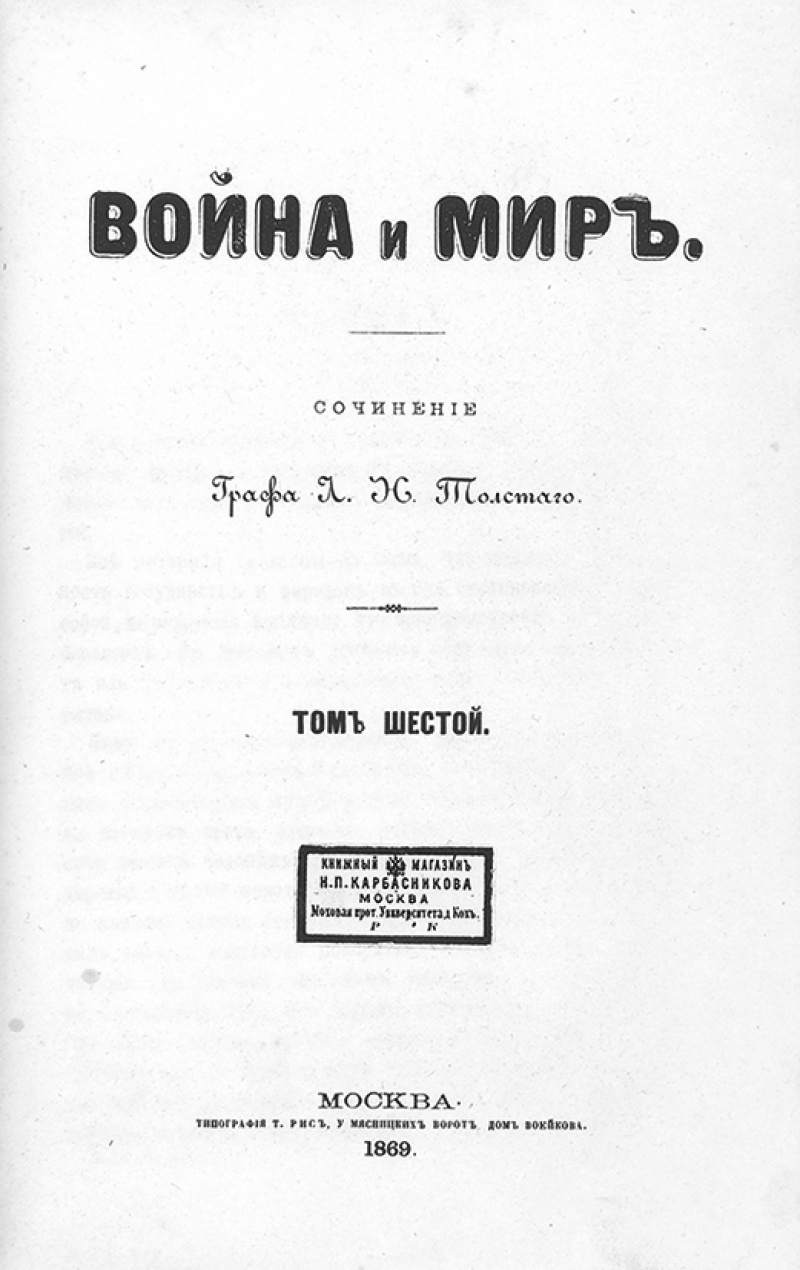
The genesis of Leo Tolstoy's "War and Peace" can be traced to his experiences as a volunteer in the Crimean War (1853-1856), which instilled in him a profound skepticism regarding the romanticized notions of warfare prevalent in his era. An early version, titled "The Year 1805," began serialization in "The Russian Messenger" (Русский вестник) in 1865, offering a glimpse into the narrative that would eventually blossom. Tolstoy famously rewrote and expanded significantly upon this initial draft, driven by a desire to explore not just historical events but the philosophical underpinnings of human agency and historical determinism. The work's publication in its complete form after an initial serial run marked a culmination of years of meticulous research, personal reflection, and literary ambition, solidifying its place as a defining work of 19th-century Russian literature.
⚙️ How It Works
"War and Peace" operates on multiple narrative levels, seamlessly blending fictional character arcs with philosophical essays. The novel follows the intertwined destinies of five aristocratic families—the Bezukhovs, Bolkonskys, Rostovs, Kuragins, and Drubetskoys—as they navigate love, loss, social maneuvering, and the existential threat posed by Napoleon Bonaparte's invasion. Tolstoy employs a panoramic style, shifting focus from intimate drawing-room conversations to the brutal realities of battles like Austerlitz and Borodino. Interspersed within the narrative are chapters where Tolstoy directly engages with historical theory, questioning the "great man" theory of history and emphasizing the collective, often unseen, forces that shape events, a technique that distinguishes it from conventional historical fiction.
📊 Key Facts & Numbers
Spanning over 1,200 pages in its most common English translations, "War and Peace" is an undertaking of considerable scale, with estimates suggesting it features over 500 characters. The novel's narrative encompasses a period of roughly 15 years, from 1805 to 1820, with the climax centering on the French invasion of Russia in 1812. Tolstoy's exploration of history is not merely descriptive; he dedicates significant portions to dissecting historical accounts, often critiquing the works of historians like Adolphe Thiers and Joseph de Maistre. The novel's initial serialization in "The Russian Messenger" reached an audience of thousands, but its eventual publication as a complete work cemented its global readership.
👥 Key People & Organizations
The central figure behind "War and Peace" is undeniably Leo Tolstoy, the Russian author whose philosophical and literary genius shaped the novel. Key fictional characters who drive the narrative include the idealistic Pierre Bezukhov, the introspective Prince Andrei Bolkonsky, and the vivacious Natasha Rostova. Historically, Napoleon Bonaparte and Mikhail Kutuzov, the Russian commander-in-chief, are pivotal figures whose actions and philosophies are scrutinized by Tolstoy. The Russian Imperial Family and the broader Russian aristocracy form the societal backdrop against which these personal and historical dramas unfold.
🌍 Cultural Impact & Influence
The cultural resonance of "War and Peace" is immense, having profoundly influenced the historical novel genre and narrative techniques in literature worldwide. Its depiction of war, stripped of glory and presented with stark realism, challenged prevailing romantic notions and set a new standard for war literature. The novel's philosophical explorations of history and free will have been debated by scholars and readers for over a century, impacting fields from philosophy of history to literary criticism. Adaptations for film, television, and stage, including Sergei Bondarchuk's acclaimed 1966 Soviet film, have introduced Tolstoy's epic to new generations, ensuring its continued presence in global culture. The phrase "an affair of 'War and Peace'" has entered common parlance to describe events of immense scope and complexity.
⚡ Current State & Latest Developments
In 2024, "War and Peace" continues to be a staple in university literature courses and a widely read classic. While no new major adaptations have been released in the immediate past, its enduring themes of conflict, personal growth, and the search for meaning remain highly relevant. Discussions surrounding its philosophical underpinnings, particularly Tolstoy's critique of historical determinism and his emphasis on individual moral choice, are ongoing in academic circles. The novel's accessibility has been further enhanced by numerous digital editions and audiobooks, making it readily available to a global audience seeking profound literary experiences. Its influence can be seen in contemporary works that grapple with large-scale historical events and their intimate human consequences.
🤔 Controversies & Debates
The primary controversy surrounding "War and Peace" often centers on Leo Tolstoy's philosophical digressions, which some critics find interrupt the narrative flow, while others laud them as the novel's most profound contribution. His deterministic view of history, which downplays the role of individual leaders like Napoleon Bonaparte in favor of the collective will and unseen forces, has been a subject of debate among historians and philosophers. Furthermore, Tolstoy's portrayal of historical figures and events has been scrutinized for its accuracy and bias, though his intention was less historical reportage and more a philosophical exploration of causality. The sheer length and density of the novel also present a barrier for some readers, leading to discussions about its accessibility and the best approaches to engaging with such a monumental work.
🔮 Future Outlook & Predictions
The future of "War and Peace" appears secure, given its status as a literary touchstone. Future adaptations are likely to continue exploring its vast narrative, potentially leveraging new technologies to visualize its epic scope and complex character dynamics. Academically, ongoing scholarship will undoubtedly continue to unpack Tolstoy's philosophical arguments, particularly in light of contemporary debates in philosophy of history and political philosophy. The novel's enduring relevance lies in its exploration of universal human experiences—love, death, war, peace, and the search for purpose—which will continue to resonate with readers across generations, ensuring its place in the canon of world literature for the foreseeable future. Its lessons on the futility of war and the importance of personal connection will likely remain potent.
💡 Practical Applications
While "War and Peace" is primarily a literary work, its insights have practical applications in understanding human behavior during crises and the dynamics of large-scale conflict. The novel serves as a powerful case study in narrative theory, demonstrating how stories can shape our understanding of history and ourselves. For leadership studies, Tolstoy's examination of figures like Mikhail Kutuzov offers perspectives on strategic thinking and the role of intuition versus rigid planning. Furthermore, its detailed portrayal of Russian society in the early 19th century provides valuable context for historians studying Russian history and the Napoleonic Wars. The novel's philosophical sections offer timeless reflections on free will, determinism, and the search for meaning, applicable to personal development and ethical considerations in any era.
Key Facts
- Category
- culture
- Type
- topic