
Contents
Overview
The concept of warehousing stretches back to antiquity, with early civilizations utilizing granaries and storehouses to stockpile essential resources like grain and salt, ensuring survival through lean periods and facilitating trade. Ancient Rome, for instance, developed extensive horrea—large warehouses—to store grain, olive oil, and wine, vital for feeding its vast population and supporting its legions. The Industrial Revolution in the 18th and 19th centuries dramatically expanded the need for warehousing as mass production surged, leading to the construction of larger, more specialized facilities near factories and transportation hubs like canals and railways. The advent of the containerization revolution in the mid-20th century, spearheaded by pioneers like Malcolm McLean, further transformed warehousing by standardizing cargo handling, making global distribution more efficient and necessitating larger distribution centers. Early pioneers in warehouse management systems, like Dematic, began developing technologies to manage these growing inventories.
⚙️ How It Works
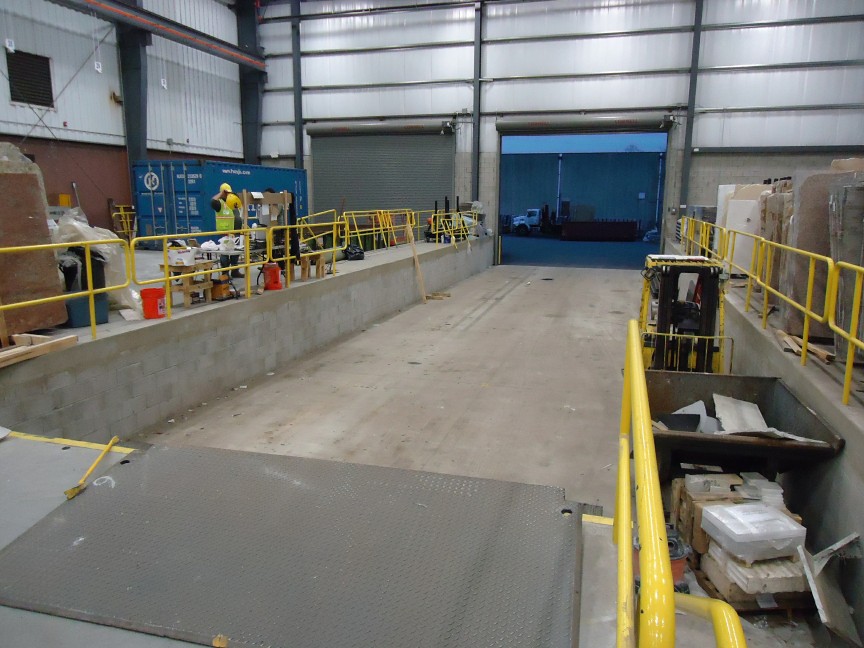
At its core, warehousing involves the systematic storage and management of inventory. Goods typically enter a warehouse via loading docks or direct rail/air/sea access, where they are received, inspected, and often scanned into a Warehouse Management System (WMS). This WMS dictates where items are stored, often on pallet racks or in shelving systems, optimizing space utilization and retrieval times. Forklifts, pallet jacks, and increasingly, Autonomous Mobile Robots (AMRs) are used for moving inventory. When an order is placed, the WMS generates a pick list, guiding workers or robots to retrieve the items. These items are then consolidated, packed, and dispatched, completing the cycle. Efficient slotting—strategically placing items based on velocity, size, and weight—is paramount for operational speed, as highlighted by logistics experts like Edgar W. Herbert-Lewis.
📊 Key Facts & Numbers
The global warehousing market was valued at approximately $180 billion in 2023 and is projected to exceed $250 billion by 2028, demonstrating robust growth driven by e-commerce expansion and global trade. The average cost to lease industrial warehouse space in the U.S. hovers around $10 per square foot annually, though this varies wildly by location and facility type. A typical large distribution center can span over 1 million square feet, housing millions of individual stock-keeping units (SKUs). In the e-commerce sector, order fulfillment times are critical, with many customers expecting delivery within 1-2 days, placing immense pressure on warehouse efficiency. For instance, Amazon's fulfillment network comprises over 1,100 facilities globally, employing hundreds of thousands of workers and robots.
👥 Key People & Organizations
Key figures in warehousing include pioneers of automation and management systems. Dematic, a leading provider of warehouse automation, has been instrumental in developing solutions since its inception. Kiva Systems (now Amazon Robotics) revolutionized fulfillment with its fleet of robots, acquired by Amazon in 2012 for $775 million. Companies like UPS and FedEx operate vast networks of warehouses and distribution centers that are integral to their global logistics operations. Organizations such as the Warehousing Education and Research Council (WERC) play a vital role in setting industry standards and promoting best practices through research and education.
🌍 Cultural Impact & Influence
Warehousing's influence extends far beyond mere storage. It underpins the very fabric of modern commerce, enabling the just-in-time inventory systems that have streamlined manufacturing and retail since the late 20th century. The rise of e-commerce has dramatically amplified warehousing's cultural significance, transforming it from a back-office function into a highly visible component of the customer experience. The speed and convenience of online shopping are directly dependent on the efficiency of fulfillment centers. Furthermore, the architectural style of warehouses, often large, utilitarian structures, has influenced industrial design and urban planning, with many former warehouses being repurposed into trendy lofts, art studios, and retail spaces, particularly in cities like New York City and London.
⚡ Current State & Latest Developments
The warehousing sector is currently experiencing unprecedented transformation driven by several key trends. The explosive growth of e-commerce continues to fuel demand for fulfillment centers, particularly those optimized for rapid order processing and last-mile delivery. Automation is becoming increasingly common in warehousing, with robotics, AI-powered WMS, and AMRs becoming increasingly common. Companies like Ocata are pushing the boundaries with highly automated grocery fulfillment. The COVID-19 pandemic highlighted supply chain vulnerabilities, leading to increased investment in inventory resilience and diversification of warehousing locations, including a rise in smaller, strategically placed micro-fulfillment centers. Sustainability is also a growing concern, with a focus on energy-efficient buildings and eco-friendly operations.
🤔 Controversies & Debates
One of the most significant debates in warehousing revolves around the balance between automation and human labor. While automation promises increased efficiency, speed, and reduced operational costs, concerns persist about job displacement for warehouse workers, a sector that employs millions globally. Critics argue that the relentless pursuit of efficiency through automation can lead to precarious working conditions and surveillance of employees, as seen in some criticisms of Amazon's warehouse practices. Another point of contention is the environmental impact of vast warehouse complexes, including land use, energy consumption, and transportation emissions. The debate over the optimal level of inventory to hold—balancing the risks of stockouts against the costs of carrying excess inventory—remains a perennial challenge, particularly in volatile economic climates.
🔮 Future Outlook & Predictions
The future of warehousing points towards hyper-automation and increased integration with broader supply chain networks. Expect to see more sophisticated robotics capable of complex tasks, alongside AI that can dynamically optimize inventory placement, predict demand with greater accuracy, and manage entire warehouse operations autonomously. The rise of drones for inventory management and potentially for last-mile delivery from warehouse hubs is also on the horizon. Warehouses will likely become more decentralized, with a proliferation of smaller, highly automated facilities closer to urban centers to meet the demand for rapid delivery. Furthermore, the integration of blockchain technology could enhance transparency and traceability throughout the supply chain, improving inventory management and security. The concept of the 'dark warehouse,' fully automated and unstaffed, will become more prevalent.
💡 Practical Applications
Warehousing's practical applications are ubiquitous, forming the bedrock of nearly every industry. Manufacturers use warehouses to store raw materials and finished goods, ensuring continuous production and timely delivery to distributors. Retailers rely on them for inventory management, fulfilling both online and in-store orders. Logistics providers operate warehouses as hubs for consolidation, deconsolidation, and distribution of goods for multiple clients. The automotive industry uses extensive parts warehouses to support assembly lines and aftermarket services. Even sectors like healthcare utilize specialized warehouses
Key Facts
- Category
- technology
- Type
- topic