
Contents
- 🌊 Origins & History
- 🔬 How It Works
- 📊 Key Facts & Numbers
- 👥 Key People & Organizations
- 🌍 Cultural Impact & Influence
- ⚡ Current State & Latest Developments
- 🤔 Controversies & Debates
- 🔮 Future Outlook & Predictions
- 💡 Practical Applications
- 📚 Related Topics & Deeper Reading
- Frequently Asked Questions
- References
- Related Topics
Overview
Water quality sensing technology refers to the array of devices, systems, and methods used to monitor and assess the chemical, physical, and biological characteristics of water. The World Health Organization highlights the need for effective water quality monitoring. The United States Environmental Protection Agency has developed a water quality index that uses sensor data to assess the health of water bodies. Xylem Inc. and Hach Company are driving innovation in this field.
🌊 Origins & History
The City of New York has implemented a water quality monitoring system that uses sensors and machine learning algorithms to detect contaminants in real-time. Companies like Xylem Inc. and Hach Company are at the forefront of this innovation.
🔬 How It Works
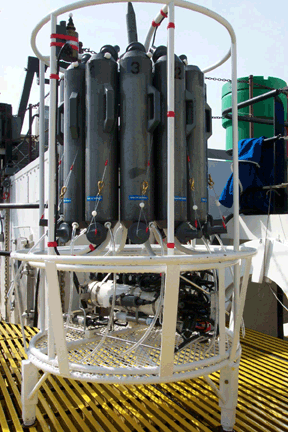
Water quality sensing technology works by using sensors to detect various parameters such as pH, temperature, turbidity, and nutrient levels. These sensors can be deployed in a variety of settings, including rivers, lakes, and oceans, as well as in drinking water treatment plants and distribution systems. The data collected by these sensors is then transmitted to a central location, where it can be analyzed and used to make informed decisions about water management.
📊 Key Facts & Numbers
The use of water quality sensing technology has numerous benefits, including improved public health, increased efficiency in water treatment and distribution, and enhanced environmental protection.
👥 Key People & Organizations
Key players in the water quality sensing technology market include Xylem Inc., Hach Company, and Veolia Environment. These companies are driving innovation in the field, with the development of new sensors and systems that are more accurate, reliable, and cost-effective.
🌍 Cultural Impact & Influence
The cultural impact of water quality sensing technology is significant, as it has the potential to improve the health and well-being of millions of people around the world. In many developing countries, access to safe drinking water is limited, and the use of water quality sensing technology can help to identify areas where water is contaminated and take steps to improve it.
⚡ Current State & Latest Developments
The current state of water quality sensing technology is one of rapid innovation and growth. New sensors and systems are being developed all the time, and the use of advanced technologies is becoming more widespread.
🤔 Controversies & Debates
There are several controversies and debates surrounding the use of water quality sensing technology, including concerns over the accuracy and reliability of the data collected, as well as the potential for over-reliance on technology and neglect of traditional monitoring methods.
🔮 Future Outlook & Predictions
The future outlook for water quality sensing technology is bright, with the potential for this technology to revolutionize the way we monitor and manage water quality.
💡 Practical Applications
The practical applications of water quality sensing technology are numerous, including improved public health, increased efficiency in water treatment and distribution, and enhanced environmental protection.
Key Facts
- Year
- 2020
- Origin
- Global
- Category
- technology
- Type
- technology
Frequently Asked Questions
What is water quality sensing technology?
Water quality sensing technology refers to the array of devices, systems, and methods used to monitor and assess the chemical, physical, and biological characteristics of water.