
Contents
- 🎵 Origins & History
- ⚙️ How It Works
- 📊 Key Facts & Numbers
- 👥 Key People & Organizations
- 🌍 Cultural Impact & Influence
- ⚡ Current State & Latest Developments
- 🤔 Controversies & Debates
- 🔮 Future Outlook & Predictions
- 💡 Practical Applications
- 📚 Related Topics & Deeper Reading
- Frequently Asked Questions
- References
- Related Topics
Overview
Woodrow Wilson Guthrie (July 14, 1912 – October 3, 1967), known universally as Woody Guthrie, stands as a colossus in American folk music, a poet laureate of the working class and the dispossessed. His prolific output, encompassing hundreds of country, folk, and children's songs, alongside ballads and improvisations, chronicled the struggles and spirit of ordinary Americans, particularly during the devastating Dust Bowl era. Guthrie's music, imbued with potent themes of American socialism, anti-fascism, and profound humanism, has not only shaped musical landscapes but also galvanized generations politically. His iconic anthem, 'This Land Is Your Land,' remains a powerful, albeit often contested, statement of national identity and social justice, cementing his legacy as a foundational voice in American culture, archived extensively in the Library of Congress and celebrated for its enduring influence on artists from Bob Dylan to Billy Bragg.
🎵 Origins & History
Woody Guthrie's story begins in Okemah, Oklahoma, amidst the harsh realities of the early 20th century. Born July 14, 1912, his formative years were shaped by the economic upheaval and social unrest that would later fuel his songwriting. The son of Charles Edward Guthrie and Nora Belle Sherman, Guthrie's early life was marked by tragedy, including the death of his mother and his father's subsequent decline. He left home in his late teens, drifting and working various jobs, experiences that provided rich fodder for his later ballads. His musical journey truly began to coalesce in the 1930s, particularly as he migrated west during the Dust Bowl crisis, witnessing firsthand the plight of displaced families and becoming a voice for their suffering and resilience. This period saw him connect with early labor organizers and folk music revivalists, solidifying his commitment to using music as a tool for social commentary and change.
⚙️ How It Works
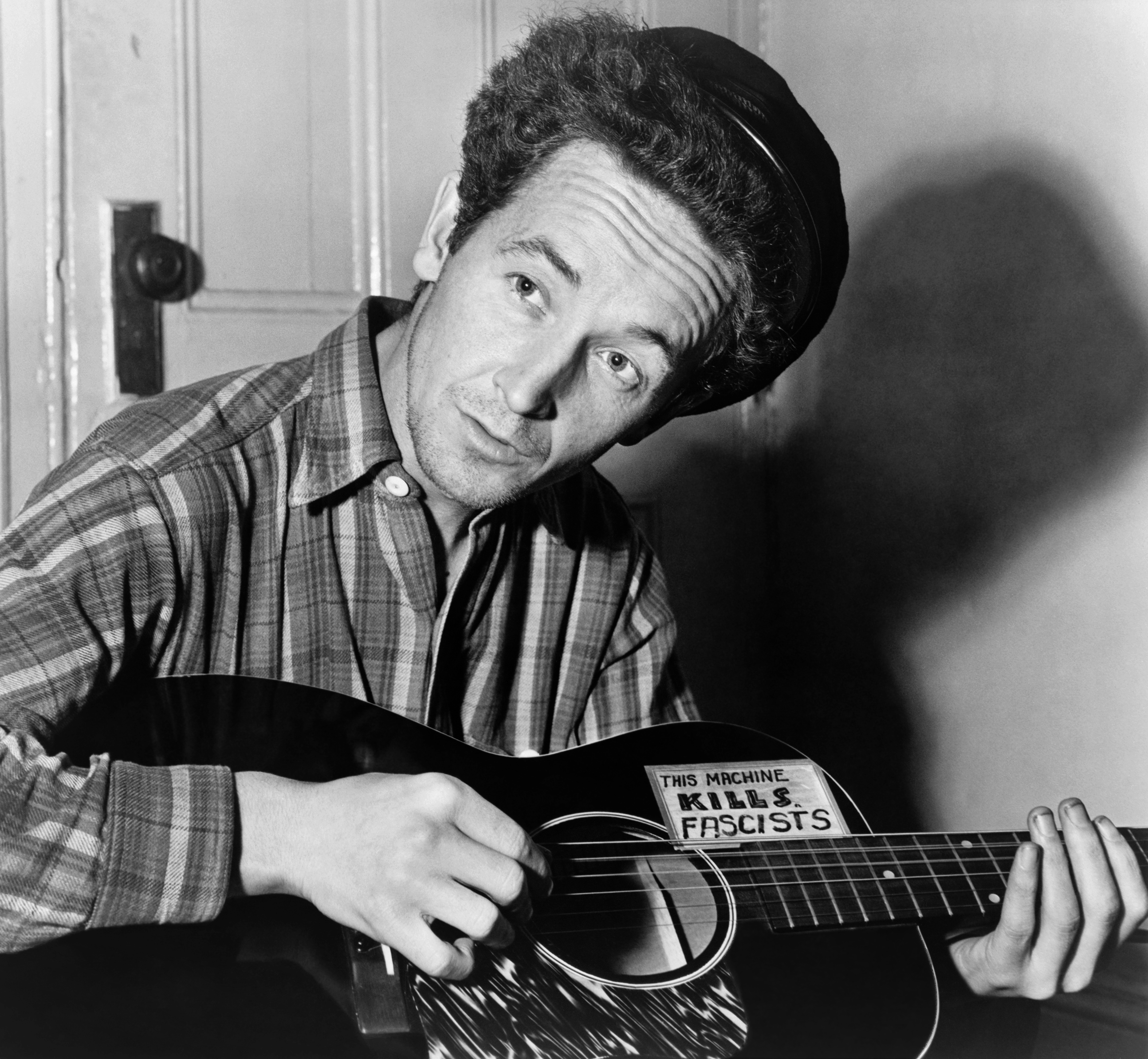
Guthrie's 'how it works' is deceptively simple: a voice, an acoustic guitar often inscribed with slogans like 'This Machine Kills Fascists,' and an unwavering commitment to storytelling. He was a master of the folk ballad form, adapting traditional melodies and structures to contemporary issues. His songwriting process was often spontaneous, drawing directly from conversations, news reports, and his own observations. He didn't just write songs; he lived them, performing in union halls, migrant camps, and on radio programs like KPFA Radio's 'Woody's Children.' His musical arrangements were typically spare, prioritizing lyrical clarity and emotional directness over complex instrumentation. This unadorned approach allowed the power of his words and the authenticity of his voice to shine through, making his songs accessible and impactful to a broad audience, from fellow laborers to intellectuals at Columbia University.
📊 Key Facts & Numbers
Guthrie's prolific output is staggering: estimates suggest he wrote over 3,000 songs throughout his career, though fewer than 1,000 were ever recorded. His seminal album, Dust Bowl Ballads (1940), recorded for RCA Victor, is considered a landmark, capturing the despair and determination of a generation. His iconic song, 'This Land Is Your Land,' penned in 1940, has become an unofficial American anthem, though its original verses offered a more critical perspective than the commonly sung ones. Guthrie's recorded works, numbering in the hundreds, are preserved in the Library of Congress, with over 2,500 recordings made for the Archive of American Folk Song between 1940 and 1941 alone. His influence is quantifiable in the sheer volume of artists who cite him as a primary inspiration, with Bob Dylan famously stating Guthrie was the only reason he picked up a guitar.
👥 Key People & Organizations
Beyond Woody Guthrie himself, a constellation of individuals and organizations shaped and amplified his work. Pete Seeger, a close friend and collaborator, was instrumental in popularizing Guthrie's songs and carrying his musical legacy forward, particularly through the The Weavers. Alan Lomax, the folklorist who curated many of Guthrie's Library of Congress recordings, played a crucial role in documenting and preserving his music. Guthrie also had significant interactions with labor unions like the Congress of Industrial Organizations (CIO), for whom he wrote numerous songs, and figures like John Steinbeck, whose novel The Grapes of Wrath shares thematic resonance with Guthrie's own narratives of migrant workers. His son, Arlo Guthrie, also became a prominent folk musician, continuing the family tradition.
🌍 Cultural Impact & Influence
Woody Guthrie's cultural impact is immeasurable, extending far beyond the folk music scene. His songs provided a soundtrack for social justice movements, influencing activists and artists alike. 'This Land Is Your Land,' in particular, has been reinterpreted countless times, serving as a rallying cry for various causes, from civil rights to environmentalism. His direct, unvarnished lyrical style and his commitment to singing about everyday people set a precedent for generations of songwriters, including Bob Dylan, Phil Ochs, and Bruce Springsteen. His anti-fascist anthems, like 'Tear the Fascists Down,' continue to resonate in contemporary political discourse, demonstrating the enduring power of his message. Guthrie's work is a cornerstone of American folk music, a vital thread in the nation's cultural fabric, and a testament to the power of music as a vehicle for social change.
⚡ Current State & Latest Developments
In the present day, Woody Guthrie's music continues to be performed, recorded, and celebrated. His extensive archives at the Library of Congress are a constant source for scholars and musicians. Contemporary artists, including Jeff Tweedy of Wilco and bands like the Dropkick Murphys, frequently cover his songs or draw inspiration from his lyrical themes. The Woody Guthrie Center in Tulsa, Oklahoma, established by his family, actively promotes his legacy through exhibitions, educational programs, and the preservation of his artifacts. Furthermore, his songs are frequently invoked in political rallies and social justice movements, underscoring their continued relevance in addressing issues of inequality and national identity in the 21st century, as seen in recent discussions surrounding immigration and economic disparity.
🤔 Controversies & Debates
The primary controversy surrounding Woody Guthrie centers on the interpretation and performance of 'This Land Is Your Land.' While widely beloved, the song's original verses, which critique private property and social inequality, are often omitted in favor of more nationalistic sentiments, a practice that has drawn criticism from Guthrie purists and his estate. Another debate revolves around the extent of his political radicalism; while he was a staunch socialist and anti-fascist, some scholars argue his personal life and relationships sometimes contradicted the ideals he espoused in his songs, leading to discussions about the authenticity of his public persona versus his private actions. The commercialization of his image and music also presents a tension, balancing the need to sustain his legacy with the anti-commercial, anti-establishment ethos he embodied, particularly concerning licensing his work for corporate advertising.
🔮 Future Outlook & Predictions
The future of Woody Guthrie's legacy appears robust, driven by ongoing academic interest, continued musical interpretation, and the enduring relevance of his themes. New generations of artists are likely to continue reinterpreting his catalog, infusing his timeless messages with contemporary sounds and perspectives, much like Billy Bragg did with his 'Mermaid Avenue' project with Wilco. The Woody Guthrie Center is poised to remain a central hub for his legacy, potentially expanding its digital archives and educational outreach. As societal issues of economic inequality, labor rights, and national identity persist, Guthrie's songs will undoubtedly continue to serve as a powerful reference point and inspiration for activism and artistic expression, ensuring his voice remains a vital part of the American conversation for decades to come.
💡 Practical Applications
Woody Guthrie's music offers a direct pipeline into the American experience, serving as a powerful tool for education and empathy. His songs are practical applications for understanding the Great Depression and the Dust Bowl migrations, providing firsthand accounts that textbooks often lack. Educators use his music in classrooms to teach about American history, social justice, and the power of protest songs. His work also serves as a model for aspiring songwriters, demonstrating how to craft compelling narratives from everyday life and infuse them with political and social consciousness. Furthermore, his commitment to oral tradition and community singing highlights the communal power of music, a practice still relevant in folk festivals and community gatherings today, fostering connection and shared identity.
Key Facts
- Year
- 1912-1967
- Origin
- United States
- Category
- culture
- Type
- person
Frequently Asked Questions
What is Woody Guthrie most famous for?
Woody Guthrie is most famous for his prolific songwriting, particularly his ballads about the struggles of ordinary Americans during the Dust Bowl era and his iconic song 'This Land Is Your Land'. His music is characterized by its directness, social commentary, and deep connection to the working class, making him a foundational figure in American folk music. His guitar, famously inscribed with 'This Machine Kills Fascists,' symbolized his commitment to using music as a tool for social and political change, influencing countless musicians and activists.
Why is 'This Land Is Your Land' considered controversial?
While 'This Land Is Your Land' is often sung as a patriotic anthem, its original verses, written by Woody Guthrie in 1940, offer a more critical perspective on American society. These verses address issues like private property, inequality, and the exclusion of marginalized groups, directly challenging the idealized national narrative. The controversy arises when these verses are omitted in favor of a more universally palatable, nationalistic interpretation, leading to debates about the song's true meaning and Guthrie's intentions, with many arguing that the sanitized version misses the song's core message of social justice and inclusivity.
Who were Woody Guthrie's major musical influences and who did he influence?
Woody Guthrie drew inspiration from a wide range of sources, including traditional ballads, blues music, and the experiences of migrant workers and union organizers he encountered. His own influence is vast and undeniable; he is widely credited with inspiring Bob Dylan, who considered Guthrie his idol and even followed him to New York City to learn from him. Other artists profoundly impacted by Guthrie include Pete Seeger, Johnny Cash, Phil Ochs, Bruce Springsteen, and Jeff Tweedy, among hundreds of others across various genres, all of whom have acknowledged his direct or indirect impact on their songwriting and musical philosophy.
What was Woody Guthrie's political stance?
Woody Guthrie was a staunch American socialist and an ardent anti-fascist. His political beliefs were deeply intertwined with his music, which often served as a platform for advocating for the rights of the working class, migrant laborers, and the poor. He actively participated in union activities and wrote numerous songs for labor organizations like the Congress of Industrial Organizations. His anti-fascist sentiments were so strong that he famously inscribed 'This Machine Kills Fascists' on his guitar, reflecting his conviction that art and music could be powerful weapons against oppression and injustice, a stance he maintained throughout his life and career.
Where are Woody Guthrie's archives located?
The most significant collection of Woody Guthrie's work, including thousands of songs, manuscripts, and recordings, is housed at the Library of Congress in Washington, D.C., particularly within the Archive of American Folk Song. Additionally, the Woody Guthrie Center in Tulsa, Oklahoma, established by his family, serves as a vital repository for his personal artifacts, instruments, writings, and artwork, actively working to preserve and promote his legacy through exhibitions and educational programs for the public and scholars alike.
How did the Dust Bowl influence Woody Guthrie's music?
The Dust Bowl crisis of the 1930s was a defining period for Woody Guthrie, both personally and artistically. Witnessing the mass migration of displaced farmers and laborers fleeing the ecological and economic devastation of the Great Plains profoundly shaped his worldview and his songwriting. He traveled extensively through these affected regions, collecting stories and observing the hardships faced by families. This direct experience fueled his most iconic works, such as the album Dust Bowl Ballads (1940), where he gave voice to the suffering, resilience, and anger of the 'Okies' and other migrants, transforming their plight into powerful, enduring folk anthems.
What is the significance of 'This Machine Kills Fascists'?
The phrase 'This Machine Kills Fascists,' famously painted on Woody Guthrie's guitar, encapsulates his belief in the power of music and art as tools for social and political resistance. In an era marked by the rise of fascism in Europe and significant social unrest in the United States, Guthrie saw his guitar not just as an instrument for entertainment, but as a weapon against oppression, ignorance, and authoritarianism. This slogan became a symbol of his anti-fascist stance and his commitment to using his art to challenge injustice, inspire solidarity among the working class, and promote democratic ideals, resonating deeply with his activist ethos.