
Contents
Overview
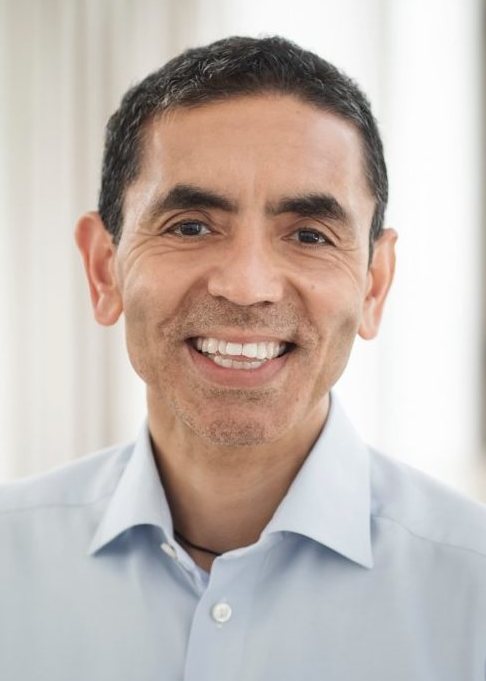
Uğur Şahin's journey began in İskenderun, Turkey. His parents, who were guest workers in Germany, brought him to Cologne at the age of four, setting the stage for a life deeply intertwined with German society and its scientific institutions. He pursued medicine at the University of Cologne, earning his doctorate with a thesis on cancer immunotherapy. His early career was spent in academic medicine, serving as an oncohematology physician and conducting research at university hospitals in Saarland and Zurich. This foundational period in cancer research and immunology laid the groundwork for his later ventures. In 2001, he co-founded Ganymed Pharmaceuticals, which focused on developing antibody-based cancer therapies, and in 2008, he co-founded BioNTech with his wife, Özlem Türeci, and Christoph Huber, aiming to harness the power of mRNA for personalized cancer vaccines.
⚙️ How It Works
Şahin's primary scientific contribution revolves around the innovative application of mRNA technology. Unlike traditional vaccines that use weakened or inactivated viruses, mRNA vaccines instruct the body's own cells to produce specific proteins—in BioNTech's case, the spike protein of the SARS-CoV-2 virus. These cellular factories then trigger an immune response, teaching the body to recognize and fight the actual virus. This approach, initially developed for personalized cancer treatments where mRNA could encode tumor-specific antigens, proved remarkably adaptable for infectious disease prevention. BioNTech's platform, refined over years of research and development, allowed for rapid vaccine design and production once the genetic sequence of COVID-19 became available, a feat that underscored the power of agile biotechnology.
📊 Key Facts & Numbers
As CEO of BioNTech, Şahin oversees a company that experienced explosive growth. BioNTech has filed over 500 patent applications and patents, reflecting a prolific research output. The company's COVID-19 vaccine, Comirnaty, developed with Pfizer, has been administered to over 1.3 billion people worldwide as of late 2022. Şahin himself has been recognized with numerous awards, including the Financial Times Person of the Year in 2020 and the Knight Commander's Cross of the Order of Merit of the Federal Republic of Germany in 2021. His personal wealth is estimated to be in the billions of dollars, making him one of Germany's wealthiest individuals.
👥 Key People & Organizations
Uğur Şahin's professional life is intrinsically linked to his wife and co-founder, Özlem Türeci, who serves as BioNTech's Chief Medical Officer. Together, they have been instrumental in shaping the company's scientific direction and commercial success. Other key figures include Christoph Huber, a co-founder and influential oncologist, and Ryan Gibbons, who played a significant role in BioNTech's early development. BioNTech itself is the central organization, a global biotechnology company headquartered in Mainz, Germany, with a strategic alliance with the pharmaceutical giant Pfizer that proved critical for the global rollout of their COVID-19 vaccine. Şahin also chairs the scientific management board of the Helmholtz Institute for Translational Oncology (HI-TRON).
🌍 Cultural Impact & Influence
The development of the BioNTech-Pfizer COVID-19 vaccine, spearheaded by Şahin, has profoundly reshaped public health strategies and accelerated the acceptance of mRNA technology. It not only provided a critical tool in combating the pandemic but also validated mRNA as a versatile platform for future medical interventions, from other infectious diseases to cancer therapies. Şahin's story, that of a Turkish immigrant's son rising to global scientific leadership, has become a powerful narrative of integration and achievement in Germany. The speed and efficacy of the vaccine's development were widely lauded, though the subsequent distribution and pricing of vaccines also sparked global discussions about equitable access and the role of pharmaceutical companies.
⚡ Current State & Latest Developments
In 2024, BioNTech continues to expand its pipeline beyond COVID-19. The company is actively developing personalized cancer vaccines, including a promising mRNA-based vaccine for melanoma in collaboration with Roche, which has shown encouraging results in early trials. BioNTech is also exploring mRNA applications for other infectious diseases, such as shingles and influenza, and is investing heavily in its manufacturing capabilities to support these diverse programs. Şahin remains at the helm, guiding the company's strategic vision as it seeks to leverage its mRNA expertise across a broad spectrum of therapeutic areas, aiming to solidify its position as a leader in next-generation medicine.
🤔 Controversies & Debates
While BioNTech's COVID-19 vaccine was a monumental success, it wasn't without its controversies. Initial concerns about the speed of development and the novel mRNA technology were largely allayed by robust clinical trial data and real-world effectiveness. However, debates have persisted regarding vaccine equity, with critics pointing to disparities in global access during the pandemic. Furthermore, the immense profits generated by BioNTech and Pfizer led to discussions about pharmaceutical pricing and intellectual property rights. Şahin himself faced scrutiny regarding his personal wealth accumulation, though he has consistently defended BioNTech's commitment to scientific advancement and patient well-being, emphasizing the company's mission-driven approach.
🔮 Future Outlook & Predictions
The future for Uğur Şahin and BioNTech appears focused on expanding the therapeutic reach of mRNA technology. Beyond infectious diseases and cancer, the company is exploring applications in autoimmune disorders and regenerative medicine. Şahin has articulated a vision where mRNA therapies can be tailored to individual patients, offering highly personalized treatments. The continued investment in research and development, coupled with strategic partnerships like the one with Roche for cancer vaccines, suggests a trajectory of sustained innovation. Experts predict that mRNA technology will become a cornerstone of future medicine, with BioNTech, under Şahin's leadership, poised to remain at the forefront of this revolution.
💡 Practical Applications
The most significant practical application of Şahin's work is the COVID-19 vaccine (Comirnaty), which has been instrumental in controlling the pandemic by reducing severe illness, hospitalizations, and deaths. Beyond this, BioNTech is developing personalized cancer vaccines, designed to stimulate the immune system to target a patient's specific tumor mutations. These therapies, still largely in clinical trials, represent a paradigm shift in oncology, moving towards highly individualized treatment plans. The underlying mRNA technology also holds potential for treating genetic disorders and other diseases, offering a versatile platform for drug development that could impact numerous areas of medicine.
Key Facts
- Category
- person
- Type
- person