
Surrealism | Vibepedia
Surrealism, born from the ashes of Dadaism in post-WWI Europe, is more than just bizarre imagery; it's a philosophical and artistic revolution aimed at…
Contents
- 🎨 What is Surrealism, Really?
- 🕰️ Origins: From Dada's Ashes to a Super-Reality
- 🧠 The Unconscious Unleashed: Key Concepts & Techniques
- 🎭 Beyond Painting: Surrealism's Multimedia Empire
- 🌍 Global Reach: How Surrealism Spread Its Wings
- 🌟 Iconic Figures: The Architects of the Dreamscape
- 💥 Controversies & Criticisms: The Darker Side of the Dream
- 💡 Surrealism Today: Echoes in Contemporary Culture
- Frequently Asked Questions
- Related Topics
Overview
Surrealism, born from the ashes of Dadaism in post-WWI Europe, is more than just bizarre imagery; it's a philosophical and artistic revolution aimed at unlocking the power of the unconscious. Spearheaded by André Breton's 1924 'Manifesto of Surrealism,' the movement championed dreams, automatic writing, and irrational juxtapositions to challenge bourgeois logic and societal norms. Its influence exploded globally, impacting not only painting and sculpture but also literature, film, and even political thought, leaving an indelible mark on 20th-century culture. While its initial fervor waned by the mid-20th century, its core tenets continue to resonate, fueling contemporary artistic explorations of the psyche and the absurd.
🎨 What is Surrealism, Really?
Surrealism isn't just about melting clocks and bizarre juxtapositions; it's a radical exploration of the human psyche, born from the ashes of World War I's disillusionment. At its heart, it's an artistic and philosophical movement that sought to liberate thought, language, and human experience from the oppressive boundaries of rationalism. Think less 'pretty pictures' and more 'psychological excavation.' It’s for anyone fascinated by the irrational, the dreamlike, and the untapped potential of the subconscious mind, aiming to bridge the gap between the waking world and the dream state into a unified 'surreality.'
🕰️ Origins: From Dada's Ashes to a Super-Reality
Emerging in Paris in the early 1920s, Surrealism was heavily influenced by the nihilistic anti-art sentiments of [[Dadaism]], but with a more constructive, albeit equally revolutionary, agenda. Led by the poet [[André Breton]], who penned the first Surrealist Manifesto in 1924, the movement sought to harness the power of the unconscious, drawing inspiration from [[Sigmund Freud]]'s theories on psychoanalysis. The trauma of the Great War had shattered faith in logic and reason, paving the way for an embrace of the irrational and the subconscious as sources of truth and creativity.
🧠 The Unconscious Unleashed: Key Concepts & Techniques
The core of Surrealist practice lies in accessing and expressing the unconscious. Techniques like [[automatism]]—writing or drawing without conscious control—were paramount. Artists employed [[frottage]] (rubbing), [[grattage]] (scraping), and [[decalcomania]] (transferring paint) to bypass rational thought and allow chance and the subconscious to dictate form. The aim was to reveal hidden desires, repressed fears, and the illogical connections that govern our inner lives, often resulting in startlingly original and unsettling imagery.
🎭 Beyond Painting: Surrealism's Multimedia Empire
While painting is perhaps its most recognized medium, Surrealism was a truly interdisciplinary phenomenon. [[Salvador Dalí]]'s iconic films like 'Un Chien Andalou' (1929) with [[Luis Buñuel]] pushed the boundaries of cinema, while writers like [[Paul Éluard]] and [[Robert Desnos]] explored automatic writing and dream narratives. The movement also extended into [[photography]], [[sculpture]], [[theatre]], and even [[comedy]], demonstrating a comprehensive assault on conventional modes of expression across the arts.
🌍 Global Reach: How Surrealism Spread Its Wings
Though rooted in Europe, Surrealism's influence quickly became global. Its ideas resonated with artists and intellectuals in North and South America, Africa, and Asia, adapting to local cultural contexts. In the United States, artists like [[Jackson Pollock]] were initially influenced by Surrealist automatism, which fed into the development of [[Abstract Expressionism]]. The movement's emphasis on liberation and the subconscious provided a potent framework for post-colonial artistic expression worldwide.
🌟 Iconic Figures: The Architects of the Dreamscape
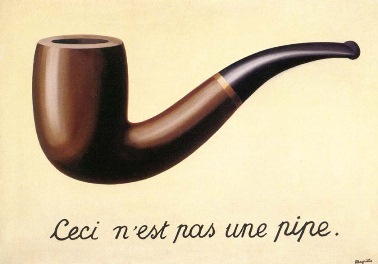
The pantheon of Surrealism includes figures whose names are synonymous with the movement's wildest visions. [[Salvador Dalí]], with his flamboyant personality and meticulously rendered dreamscapes, became the movement's most recognizable face. [[Max Ernst]] pioneered innovative techniques and explored mythic themes. [[René Magritte]] challenged perception with his witty and thought-provoking visual paradoxes, while [[Joan Miró]] developed a unique biomorphic style. [[Frida Kahlo]], though sometimes hesitant to be labeled, infused her deeply personal and often painful experiences into a surreal visual language.
💥 Controversies & Criticisms: The Darker Side of the Dream
Surrealism wasn't without its detractors. Critics often accused the movement of being overly obscure, decadent, or even politically naive, particularly its relationship with communism. The male-dominated leadership, particularly Breton's authoritarian tendencies, also drew criticism, as did the movement's often problematic portrayal of women, who were frequently relegated to muse or object status. The inherent subjectivity of 'unconscious expression' also led to debates about artistic intent versus accidental discovery.
💡 Surrealism Today: Echoes in Contemporary Culture
The spirit of Surrealism continues to permeate contemporary culture, from the mind-bending visuals in [[science fiction films]] and [[video games]] to the experimental narratives in [[avant-garde literature]]. Its legacy is evident in the work of artists who explore identity, the subconscious, and the uncanny. While the formal movement may have waned, its core tenets—challenging reality, embracing the irrational, and plumbing the depths of the human mind—remain a potent force in artistic and cultural innovation, influencing everything from [[advertising]] to [[digital art]].
Key Facts
- Year
- 1924
- Origin
- Paris, France
- Category
- Art Movements
- Type
- Art Movement
Frequently Asked Questions
Is Surrealism just about weird dreams?
While dreamlike imagery is a hallmark, Surrealism is far more profound. It's a philosophical and psychological exploration aiming to reconcile dream and reality into a 'surreality.' The goal was to liberate the mind from rational constraints and tap into the unconscious for deeper truths, often resulting in startling, illogical, or symbolic representations.
Who were the most important Surrealist artists?
The most iconic figures include [[Salvador Dalí]], known for his melting clocks and paranoiac-critical method; [[René Magritte]], famous for his thought-provoking visual paradoxes; [[Max Ernst]], a pioneer of techniques like frottage; and [[Joan Miró]], with his distinctive biomorphic forms. [[Frida Kahlo]] also produced deeply personal works with strong surreal elements.
What techniques did Surrealists use?
Surrealists employed various methods to bypass conscious control and access the unconscious. Key techniques include [[automatism]] (automatic writing/drawing), [[frottage]] (rubbing), [[grattage]] (scraping), [[decalcomania]] (paint transfer), and [[exquisite corpse]] (collaborative drawing/writing). These methods aimed to introduce chance and spontaneity into the creative process.
Did Surrealism only influence painting?
Absolutely not. Surrealism was a multidisciplinary movement. It significantly impacted [[literature]], [[poetry]], [[photography]], [[film]] (e.g., Buñuel and Dalí's 'Un Chien Andalou'), [[theatre]], and even [[music]] and [[comedy]]. The goal was a total liberation of expression across all art forms.
Is Surrealism still relevant today?
Yes, the core ideas of Surrealism—challenging perception, exploring the subconscious, and embracing the irrational—continue to resonate. Its influence is visible in contemporary [[film]], [[video games]], [[advertising]], and the work of artists who delve into psychological themes and uncanny aesthetics. The movement's legacy lies in its enduring invitation to question reality.
What's the difference between Surrealism and Dadaism?
While both emerged from the disillusionment of WWI and rejected bourgeois values, Dadaism was primarily anti-art and nihilistic, seeking to destroy existing artistic conventions. Surrealism, emerging from Dada, was more constructive, aiming to create a new reality ('surreality') by synthesizing dream and waking life through the exploration of the unconscious mind.