
Contents
- 📈 Introduction to Competitive Strategy
- ⚙️ Analyzing the Competitive Environment
- 📊 Key Concepts and Tools
- 👥 Leading Strategists and Their Approaches
- 🌍 Globalization and Competitive Strategy
- ⚡ Current Trends and Challenges
- 🤔 Common Pitfalls and Mistakes
- 🔮 Future of Competitive Strategy
- 💡 Practical Applications and Case Studies
- 📚 Further Reading and Resources
- Frequently Asked Questions
- References
- Related Topics
Overview
Competitive strategy refers to the comprehensive plan of action a company takes to gain a sustainable competitive advantage in the marketplace. It involves analyzing the competitive environment, identifying key strengths and weaknesses, and developing a unique value proposition that differentiates the company from its rivals. With the rise of globalization and technological advancements, competitive strategy has become a crucial aspect of business success, as companies must navigate complex market dynamics and stay ahead of the competition to survive. According to Michael E. Porter, a renowned expert in competitive strategy, companies can use tools like Porter's Five Forces Analysis to assess the competitive landscape and develop effective strategies. By understanding the competitive forces at play, companies can create a tailored strategy that leverages their strengths, mitigates their weaknesses, and capitalizes on market opportunities. In today's fast-paced business environment, a well-crafted competitive strategy is essential for driving growth, innovation, and profitability. As noted by Gary Hamel, a leading business strategist, companies must be willing to challenge conventional wisdom and embrace innovative approaches to stay ahead of the competition. With the increasing importance of digital transformation, companies like Amazon and Google are redefining the competitive landscape, and smaller companies must adapt quickly to remain relevant. By developing a robust competitive strategy, companies can position themselves for long-term success and stay ahead of the competition in an ever-evolving marketplace.
📈 Introduction to Competitive Strategy
Competitive strategy is a critical component of business success, as it enables companies to differentiate themselves from rivals and achieve a sustainable competitive advantage. As noted by Philip Kotler, a prominent marketing expert, companies must understand their target audience and develop a unique value proposition that meets their needs and exceeds their expectations. By analyzing the competitive environment using tools like SWOT analysis and Porter's Five Forces Analysis, companies can identify key strengths and weaknesses, as well as opportunities and threats. For example, companies like Apple and Microsoft have successfully leveraged their strengths in innovation and marketing to dominate their respective markets.
⚙️ Analyzing the Competitive Environment
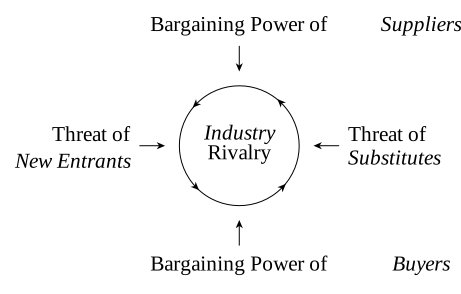
The competitive environment is characterized by five key forces, as identified by Michael E. Porter: threat of new entrants, bargaining power of suppliers, bargaining power of buyers, threat of substitute products, and rivalry among existing competitors. By understanding these forces, companies can develop strategies to mitigate threats and capitalize on opportunities. For instance, companies like Uber and Airbnb have disrupted traditional industries by leveraging the power of digital platforms and creating new market opportunities.
📊 Key Concepts and Tools
Key concepts and tools in competitive strategy include market segmentation, target marketing, and positioning. Companies must also consider their value chain and supply chain to optimize their operations and reduce costs. As noted by Jeff Bezos, founder of Amazon, companies must be willing to experiment and innovate to stay ahead of the competition. By leveraging tools like data analytics and machine learning, companies can gain valuable insights into customer behavior and market trends.
👥 Leading Strategists and Their Approaches
Leading strategists like Gary Hamel and CK Prahalad have developed innovative approaches to competitive strategy, emphasizing the importance of disruptive innovation and core competence. Companies like Google and Facebook have successfully leveraged these approaches to dominate their respective markets. By understanding the competitive landscape and developing a tailored strategy, companies can achieve a sustainable competitive advantage and drive long-term success.
🌍 Globalization and Competitive Strategy
Globalization has significantly impacted competitive strategy, as companies must now navigate complex global markets and compete with rivals from around the world. According to Thomas Friedman, a renowned expert on globalization, companies must be willing to adapt to changing market conditions and leverage global opportunities to remain competitive. By developing a global mindset and leveraging digital technologies, companies can expand their reach and stay ahead of the competition. For example, companies like Mcdonald's and Coca-Cola have successfully expanded their operations globally, leveraging their brand recognition and marketing prowess to drive growth.
⚡ Current Trends and Challenges
Current trends and challenges in competitive strategy include the rise of digital transformation, artificial intelligence, and sustainability. Companies must also navigate complex regulatory environments and manage reputation risk. As noted by Bill Gates, founder of Microsoft, companies must be willing to invest in research and development to stay ahead of the competition. By leveraging emerging technologies and developing a robust competitive strategy, companies can drive innovation and achieve long-term success.
🤔 Common Pitfalls and Mistakes
Common pitfalls and mistakes in competitive strategy include failing to understand the competitive environment, neglecting to develop a unique value proposition, and failing to adapt to changing market conditions. Companies must also avoid groupthink and confirmation bias to ensure that their strategy is based on objective analysis and data-driven insights. By avoiding these pitfalls and developing a well-crafted competitive strategy, companies can achieve a sustainable competitive advantage and drive long-term success.
🔮 Future of Competitive Strategy
The future of competitive strategy will be shaped by emerging technologies like blockchain and Internet of Things. Companies must also prioritize corporate social responsibility and environmental sustainability to maintain a positive reputation and attract socially conscious consumers. As noted by Elon Musk, founder of Tesla and SpaceX, companies must be willing to take risks and invest in innovative technologies to stay ahead of the competition. By developing a robust competitive strategy and leveraging emerging technologies, companies can drive growth, innovation, and profitability in an ever-evolving marketplace.
💡 Practical Applications and Case Studies
Practical applications and case studies of competitive strategy can be seen in companies like Amazon, Google, and Facebook, which have successfully leveraged digital technologies and innovative business models to dominate their respective markets. By understanding the competitive landscape and developing a tailored strategy, companies can achieve a sustainable competitive advantage and drive long-term success. For example, companies like Uber and Airbnb have disrupted traditional industries by leveraging the power of digital platforms and creating new market opportunities.
📚 Further Reading and Resources
Further reading and resources on competitive strategy include books like Competitive Strategy by Michael E. Porter and The Competitive Advantage by Gary Hamel. Companies can also leverage online resources like Harvard Business Review and Mckinsey Quarterly to stay up-to-date on the latest trends and best practices in competitive strategy.
Key Facts
- Year
- 1979
- Origin
- Harvard Business School
- Category
- business
- Type
- concept
Frequently Asked Questions
What is competitive strategy?
Competitive strategy refers to the comprehensive plan of action a company takes to gain a sustainable competitive advantage in the marketplace. It involves analyzing the competitive environment, identifying key strengths and weaknesses, and developing a unique value proposition that differentiates the company from its rivals. As noted by Michael E. Porter, companies can use tools like Porter's Five Forces Analysis to assess the competitive landscape and develop effective strategies.
Who is Michael E. Porter?
Michael E. Porter is a renowned expert in competitive strategy and the developer of Porter's Five Forces Analysis. He is a professor at Harvard Business School and has written extensively on competitive strategy and business management. His work has been widely influential in shaping the field of competitive strategy, and companies like Apple and Google have successfully leveraged his ideas to dominate their respective markets.
What is the role of digital transformation in competitive strategy?
Digital transformation plays a critical role in competitive strategy, as it enables companies to leverage digital technologies and innovative business models to gain a competitive advantage. Companies like Amazon and Facebook have successfully leveraged digital transformation to dominate their respective markets, and other companies must adapt quickly to remain relevant. By developing a digital transformation strategy, companies can drive innovation, improve customer engagement, and achieve long-term success.
How can companies develop a sustainable competitive advantage?
Companies can develop a sustainable competitive advantage by understanding their competitive environment, identifying key strengths and weaknesses, and developing a unique value proposition that differentiates them from their rivals. They must also be willing to adapt to changing market conditions and leverage emerging technologies to stay ahead of the competition. As noted by Gary Hamel, companies must be willing to challenge conventional wisdom and embrace innovative approaches to stay ahead of the competition.
What is the importance of sustainability in competitive strategy?
Sustainability is critical in competitive strategy, as companies must prioritize environmental sustainability and social responsibility to maintain a positive reputation and attract socially conscious consumers. Companies like Patagonia and The Body Shop have successfully leveraged sustainability to drive growth and innovation, and other companies must follow suit to remain competitive. By developing a sustainability strategy, companies can reduce their environmental footprint, improve their brand reputation, and achieve long-term success.
How can companies leverage competitive strategy to drive growth and innovation?
Companies can leverage competitive strategy to drive growth and innovation by understanding their competitive environment, identifying key strengths and weaknesses, and developing a unique value proposition that differentiates them from their rivals. They must also be willing to adapt to changing market conditions and leverage emerging technologies to stay ahead of the competition. By developing a robust competitive strategy, companies can drive innovation, improve customer engagement, and achieve long-term success. As noted by Elon Musk, companies must be willing to take risks and invest in innovative technologies to stay ahead of the competition.
What is the role of leadership in competitive strategy?
Leadership plays a critical role in competitive strategy, as leaders must be willing to challenge conventional wisdom and embrace innovative approaches to stay ahead of the competition. They must also be able to develop and implement a comprehensive plan of action that leverages the company's strengths and mitigates its weaknesses. As noted by Jeff Bezos, leaders must be willing to experiment and innovate to drive growth and innovation. By developing a strong leadership team, companies can drive innovation, improve customer engagement, and achieve long-term success.
How can companies measure the effectiveness of their competitive strategy?
Companies can measure the effectiveness of their competitive strategy by tracking key performance indicators (KPIs) such as revenue growth, market share, and customer satisfaction. They must also be willing to adapt to changing market conditions and leverage emerging technologies to stay ahead of the competition. By developing a robust competitive strategy and tracking KPIs, companies can drive innovation, improve customer engagement, and achieve long-term success. As noted by Bill Gates, companies must be willing to invest in research and development to stay ahead of the competition.