
Contents
- 📈 What Are Derivatives and Who Uses Them?
- 🏛️ A Brief History: From Grain to Global Markets
- ⚙️ How Do Derivatives Actually Work? (The Mechanics)
- ⚖️ The Double-Edged Sword: Risk and Reward
- 📊 Types of Derivatives: A Quick Taxonomy
- 🌍 Global Reach and Major Trading Hubs
- 💡 The Vibe: Energy and Controversy
- 🚀 The Future of Derivatives: What's Next?
- Frequently Asked Questions
- Related Topics
Overview
Derivative markets are where financial contracts derive their value from an underlying asset, be it stocks, bonds, commodities, or currencies. These instruments, including futures, options, swaps, and forwards, are not mere speculative tools; they are fundamental to risk management, price discovery, and capital allocation across the global economy. While often associated with high-stakes trading and potential volatility, their role in hedging against price fluctuations for businesses and investors is indispensable. Understanding the mechanics and implications of derivatives is crucial for anyone navigating the complexities of modern financial systems, from institutional investors to corporate treasurers. The sheer volume traded, often in the trillions daily, underscores their pervasive influence.
📈 What Are Derivatives and Who Uses Them?
Derivatives are financial contracts whose value is derived from an underlying asset, index, or rate. Think of them as bets on the future price movements of stocks, bonds, commodities, currencies, or even interest rates. They aren't for the faint of heart; their primary users are sophisticated investors, corporations hedging against price volatility, and institutional players like hedge funds and investment banks. For the average retail investor, direct engagement is rare, but understanding derivatives is crucial as they underpin much of modern asset pricing and risk management.
🏛️ A Brief History: From Grain to Global Markets
The concept of derivatives isn't new. Ancient Mesopotamians used forward contracts to secure future grain prices, and the CBOT formalized futures trading in 1848, initially for agricultural products. The real explosion, however, came in the late 20th century with the rise of financial derivatives like options contracts and swaps, transforming them from agricultural tools into the complex, global engine of modern finance we see today. The 1970s saw significant innovation, particularly with the establishment of the CME's International Monetary Market.
⚙️ How Do Derivatives Actually Work? (The Mechanics)
At their core, derivatives involve agreements between two parties. A futures contract, for instance, obligates one party to buy and another to sell an asset at a predetermined price on a future date. An options contract gives the buyer the right, but not the obligation, to buy or sell an asset at a specific price (the strike price) before a certain expiration date. The value of these contracts fluctuates based on the price of the underlying asset, making them powerful tools for speculation and hedging, but also susceptible to market volatility.
⚖️ The Double-Edged Sword: Risk and Reward
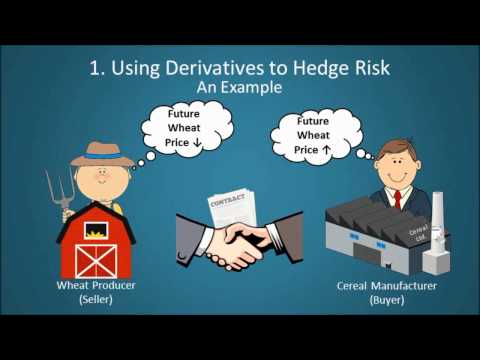
Derivatives are a classic double-edged sword. On one side, they are indispensable for hedging risk. A farmer can lock in a price for their crops using futures, protecting them from price drops. An airline can hedge against rising fuel costs with oil derivatives. On the other side, their leverage amplifies both gains and losses, making them potent vehicles for speculation. The 2008 financial crisis highlighted the systemic risks when complex derivatives, like credit default swaps, were poorly understood and widely held.
📊 Types of Derivatives: A Quick Taxonomy
The derivative universe is vast, but the main categories are futures, options, swaps, and forwards. Futures and forwards are agreements to buy/sell at a future date. Options grant the right, not the obligation. Swaps involve exchanging cash flows, often interest rate or currency. Each type serves distinct purposes, from simple price discovery to intricate structured products designed for specific risk appetites and market views. Understanding these distinctions is key to navigating the market.
🌍 Global Reach and Major Trading Hubs
The derivatives market is truly global, with major trading hubs in New York, London, and Tokyo. The OTC market, where contracts are customized and traded directly between parties, is massive and less regulated than exchange-traded derivatives. Major exchanges like the CME Group and ICE facilitate standardized contracts, providing transparency and liquidity. The interconnectedness means events in one region can rapidly impact global derivative prices, a testament to their systemic importance.
💡 The Vibe: Energy and Controversy
The 'vibe' of the derivatives market is one of intense energy, high stakes, and persistent controversy. It's a place where fortunes are made and lost rapidly, fueled by complex algorithms and deep market insights. Critics often point to its role in amplifying financial instability and its opacity, particularly in the OTC space. Proponents argue it's essential for efficient price discovery and risk management, making the broader economy more resilient. The Controversy Spectrum for derivatives is high, with ongoing debates about regulation and transparency.
🚀 The Future of Derivatives: What's Next?
The future of derivatives is likely to be shaped by FinTech innovation and evolving regulatory landscapes. Blockchain technology and DeFi are exploring new models for derivative creation and trading, potentially offering greater transparency and accessibility. Regulators continue to grapple with how to manage the systemic risks, with ongoing efforts to increase central clearing for OTC derivatives. Expect continued evolution in product design, driven by demand for more sophisticated hedging and investment strategies in an increasingly volatile world.
Key Facts
- Year
- 1970s (modern era)
- Origin
- Ancient forms of forward contracts and futures existed for centuries, but the modern, standardized derivative market truly began to take shape in the 1970s with the establishment of the Chicago Mercantile Exchange (CME) and the Chicago Board Options Exchange (CBOE).
- Category
- Finance & Economics
- Type
- Topic
Frequently Asked Questions
Can a beginner trade derivatives?
While theoretically possible, it's strongly discouraged. Derivatives are complex instruments with high leverage, meaning small price movements can lead to substantial losses. Beginners should focus on understanding foundational concepts and perhaps start with simpler instruments like stocks or ETFs before even considering derivatives. Educational resources and simulated trading accounts are crucial first steps if one is determined.
What's the difference between futures and forwards?
Both are agreements to buy/sell an asset at a future date and price. The key difference lies in standardization and exchange trading. Futures contracts are standardized, exchange-traded, and cleared through a central counterparty, offering more liquidity and transparency. Forwards, on the other hand, are customized, OTC contracts negotiated directly between two parties, making them more flexible but also carrying counterparty risk.
How do derivatives contribute to market efficiency?
Derivatives facilitate price discovery by reflecting market expectations of future asset prices. They also enable risk transfer, allowing those who want to avoid certain risks (like price fluctuations) to pass them on to those willing to assume them, often for a premium. This process can lead to more efficient allocation of capital across the economy.
What are the biggest risks in trading derivatives?
The primary risks are market risk (adverse price movements in the underlying asset), leverage risk (amplified losses due to borrowed funds or contract structure), and counterparty risk (the risk that the other party in an OTC contract will default). For exchange-traded derivatives, liquidity risk can also be a concern if there aren't enough buyers or sellers.
Are all derivatives traded on exchanges?
No. Derivatives are broadly categorized into exchange-traded derivatives (ETDs) and OTC derivatives. ETDs are standardized and traded on regulated exchanges like the CME Group. OTC derivatives are customized contracts negotiated directly between two parties, offering flexibility but often lacking the transparency and regulatory oversight of ETDs.
How did derivatives contribute to the 2008 financial crisis?
Complex derivatives, particularly credit default swaps, played a significant role. These instruments, often poorly understood and inadequately regulated, were used to bet on the performance of mortgage-backed securities. When the housing market collapsed, the interconnectedness and opacity of the CDS market led to widespread defaults and a near-collapse of the global financial system, demonstrating the dangers of systemic risk.