
Contents
Overview
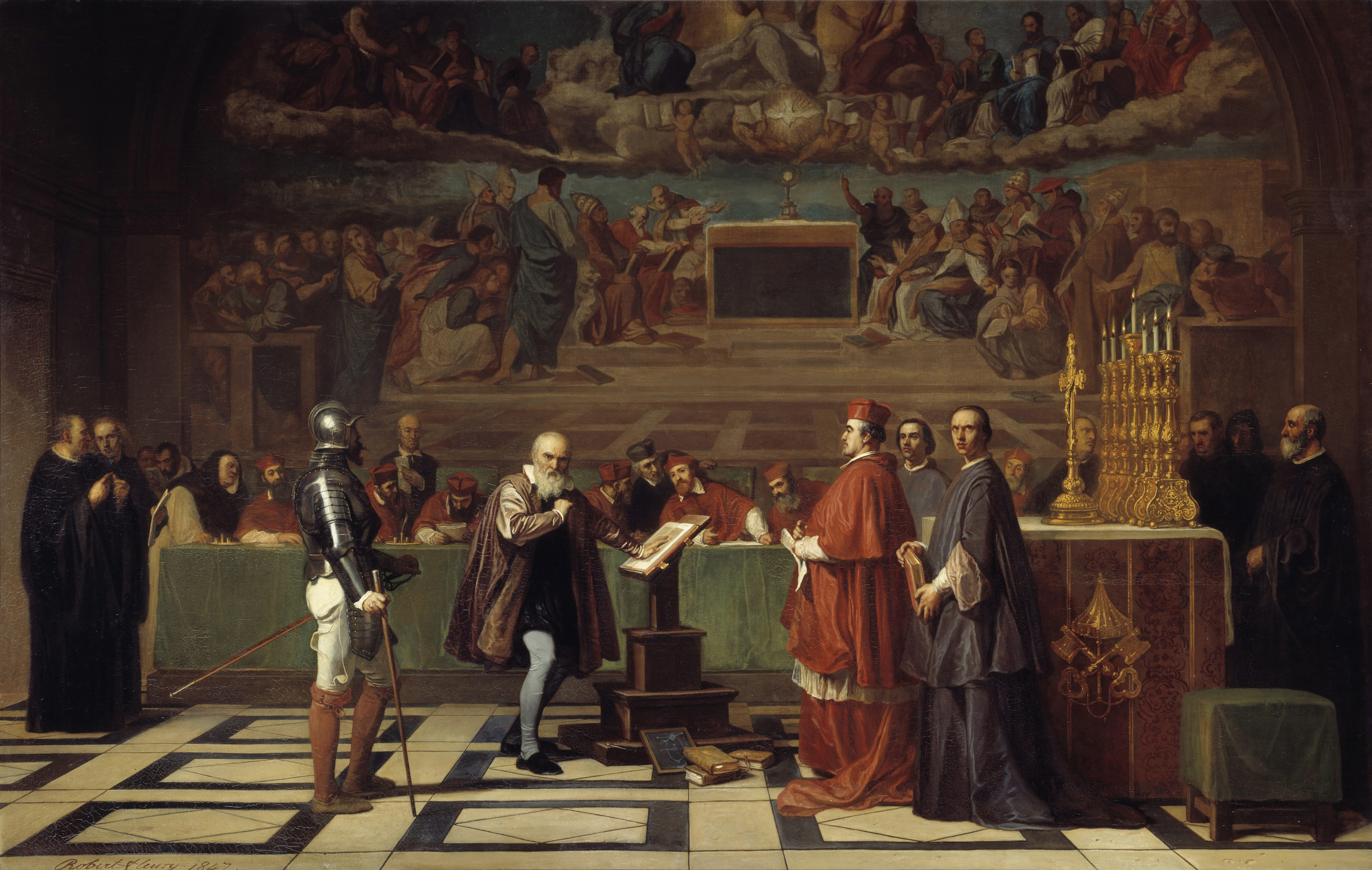
The roots of Galileo's controversy stretch back to the early 17th century, ignited by the burgeoning scientific revolution and the radical ideas of Nicolaus Copernicus. Copernicus's 1543 treatise, De revolutionibus orbium coelestium, proposed a heliocentric system, but it was Galileo's meticulous telescopic observations, published in his 1610 work Sidereus Nuncius, that provided compelling empirical evidence. His discovery of the moons of Jupiter, the phases of Venus, and sunspots directly challenged the long-held geocentric model championed by Aristotle and Ptolemy, which had been integrated into Catholic theology for centuries. This empirical challenge set the stage for a confrontation with ecclesiastical authorities who viewed the Copernican system as a threat to biblical literalism and the established cosmic order.
⚙️ How It Works
At its core, Galileo's controversy revolved around two competing epistemologies: empirical observation versus scriptural authority. Galileo, armed with his improved telescope, presented direct evidence of celestial phenomena that were irreconcilable with the prevailing geocentric cosmology. He argued that the Bible, while divinely inspired, was not intended as a scientific textbook and that its passages concerning the heavens should be interpreted in light of scientific understanding. Conversely, his opponents, including figures like Cardinal Robert Bellarmine, insisted on a literal interpretation of scripture, which seemed to support a stationary Earth. The debate was further complicated by the political landscape of the time, with the Catholic Church seeking to maintain its intellectual and spiritual authority in an era of increasing dissent, exemplified by the Protestant Reformation.
📊 Key Facts & Numbers
The controversy generated significant numbers and dates that underscore its gravity. Galileo published his groundbreaking telescopic observations in Sidereus-Nuncius in 1610. The first formal condemnation of heliocentrism occurred in 1616 when the Roman Inquisition declared the Copernican doctrine "false and altogether contrary to Holy Scripture." Galileo's most famous work, Dialogue Concerning the Two Chief World Systems, was published in 1632, leading to his second trial. By 1633, the Inquisition had sentenced him to house arrest, a punishment that lasted until his death in 1642. His banned book, Dialogue-Concerning-the-Two-Chief-World-Systems, remained on the Index of Forbidden Books until 1835, a testament to the enduring impact of the conflict. The scientific community's eventual embrace of heliocentrism, solidified by Isaac Newton's laws of motion and universal gravitation in the late 17th century, represented a paradigm shift.
👥 Key People & Organizations
Several key individuals and organizations were central to Galileo's controversy. Galileo Galilei himself, the brilliant astronomer and physicist, was the primary protagonist, whose observational prowess and persuasive arguments challenged the status quo. Nicolaus Copernicus, though deceased, provided the foundational heliocentric model. Cardinal Robert Bellarmine, a prominent theologian and Jesuit, served as a key intellectual opponent, advocating for scriptural literalism. Pope Urban VIII, initially a friend of Galileo, ultimately sanctioned the severe judgment against him. The Roman Inquisition, the Holy Office established in 1542 to combat heresy, acted as the judicial body that condemned Galileo's work. Later, figures like Johannes Kepler, with his laws of planetary motion, and Isaac Newton, with his theory of gravity, provided further scientific validation for heliocentrism, indirectly resolving the core scientific dispute.
🌍 Cultural Impact & Influence
The cultural impact of Galileo's controversy is immeasurable, resonating far beyond the realm of astronomy. It became a potent symbol of the conflict between scientific inquiry and religious dogma, a narrative that has been invoked repeatedly in subsequent debates about science and faith. The affair cemented the idea of the scientific method, emphasizing empirical evidence and mathematical reasoning, as a powerful tool for understanding the universe, distinct from theological interpretation. This shift influenced the development of secular education and the rise of scientific societies like the Royal Society of London (founded 1660) and the French Academy of Sciences (founded 1666). The story of Galileo's persecution, though complex, has inspired countless scientists and thinkers, fostering a cultural appreciation for intellectual freedom and the pursuit of truth, even in the face of powerful opposition. It also contributed to the perception of science as a progressive force, often at odds with tradition.
⚡ Current State & Latest Developments
While the direct confrontation between Galileo and the Church concluded centuries ago, the echoes of his controversy continue to shape contemporary discussions. The fundamental tension between scientific findings and deeply held beliefs remains a recurring theme, seen in debates surrounding climate change, evolution, and vaccination. Modern scientific institutions, such as NASA and the European Space Agency, operate with a level of autonomy and public trust that Galileo could only have dreamed of, yet the need for dialogue and understanding between science and various belief systems persists. The ongoing exploration of the cosmos, from the James Webb Space Telescope's stunning images to the search for exoplanets, stands as a direct legacy of Galileo's pioneering observations, demonstrating humanity's persistent drive to understand our place in the universe. The digital age has also democratized scientific information, allowing for broader engagement but also creating new avenues for misinformation that echo the challenges Galileo faced in disseminating accurate knowledge.
🤔 Controversies & Debates
The controversies surrounding Galileo's case are multifaceted and continue to be debated by historians and theologians. One central debate concerns the extent to which Galileo was deliberately targeted versus being a victim of unfortunate timing and personality clashes within the Church hierarchy. Some scholars argue that Cardinal Robert Bellarmine offered Galileo a way out by suggesting he present heliocentrism as a mathematical hypothesis, a compromise Galileo ultimately rejected. Another point of contention is the role of Pope Urban VIII; while he initially supported Galileo, his later actions suggest political expediency and a desire to assert papal authority. Furthermore, the degree to which the Church's actions were driven by genuine theological conviction versus a fear of losing institutional power in a rapidly changing world remains a subject of intense scrutiny. The narrative of science versus religion, while powerful, often oversimplifies the complex interplay of scientific, political, and personal factors at play during the Galileo affair.
🔮 Future Outlook & Predictions
The future outlook for the relationship between scientific discovery and societal acceptance, directly influenced by Galileo's legacy, is one of ongoing negotiation. As scientific frontiers expand into areas like artificial intelligence, genetic engineering, and cosmology, the potential for new controversies mirroring Galileo's remains. The increasing pace of scientific advancement, coupled with the rapid dissemination of information (and misinformation) via platforms like X and Facebook, necessitates robust public education and critical thinking skills. Future generations will likely grapple with how to integrate novel scientific paradigms into existing cultural and ethical frameworks, dra
Key Facts
- Category
- history
- Type
- topic