
Contents
- 🎵 Origins & History
- ⚙️ How It Works
- 📊 Key Facts & Numbers
- 👥 Key People & Organizations
- 🌍 Cultural Impact & Influence
- ⚡ Current State & Latest Developments
- 🤔 Controversies & Debates
- 🔮 Future Outlook & Predictions
- 💡 Practical Applications
- 📚 Related Topics & Deeper Reading
- Frequently Asked Questions
- References
- Related Topics
Overview
The history of agriculture is not a single narrative but a mosaic of independent innovations, with at least eleven distinct centers of origin across the Old and New Worlds. While the opportunistic collection of wild grains like those found at Ohalo II around 21,000 BC on the shores of the Sea of Galilee hints at early human interaction with edible grasses, true domestication took millennia. The Fertile Crescent emerged as a crucial early hub, with the cultivation of the eight Neolithic founder crops – emmer wheat, einkorn wheat, hulled barley, peas, lentils, bitter vetch, chickpeas, and flax – firmly established by 9500 BC. Independent developments also occurred in East Asia with rice and millet, in Mesoamerica with maize, and in the Andes with potatoes and quinoa, each laying the groundwork for distinct agrarian societies and influencing global dietary patterns for millennia. The spread of these innovations, often through diffusion and migration, was a slow but transformative process, fundamentally altering human settlement patterns and social structures.
⚙️ How It Works
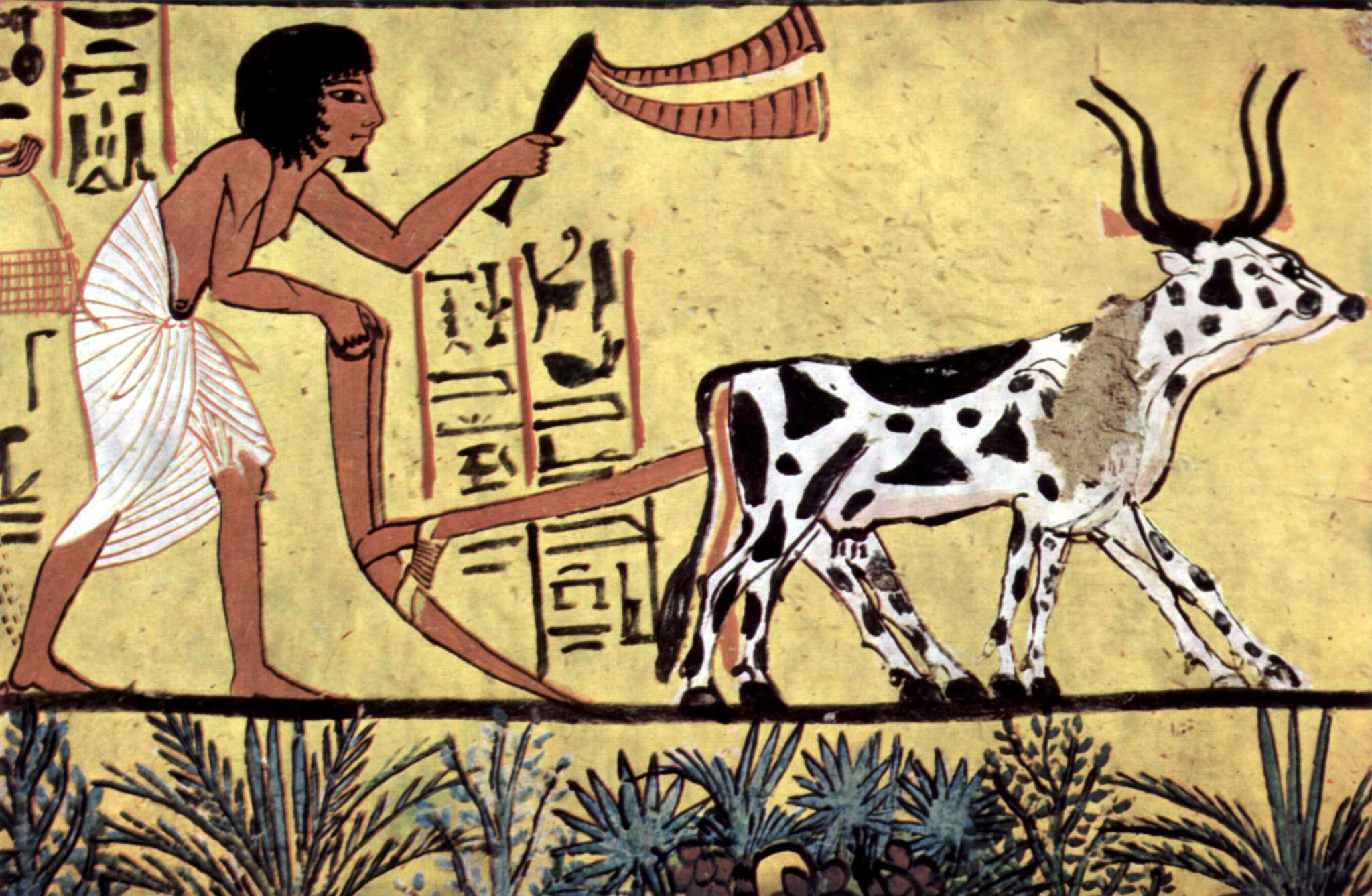
The core mechanism of agriculture involves the deliberate manipulation of plant and animal life cycles for human benefit, a process that evolved dramatically over time. Early farmers practiced simple cultivation, selecting seeds from the most productive wild plants and saving them for future sowing. This led to genetic changes in domesticated species, making them more amenable to cultivation and higher yielding, though often less resilient than their wild ancestors. The development of tools, from simple digging sticks to plows, increased efficiency. Later innovations, such as irrigation systems in ancient Mesopotamia and Ancient Egypt, allowed for cultivation in arid regions, expanding arable land. The Industrial Revolution brought mechanization, with inventions like the seed drill and later the tractor, dramatically increasing scale and productivity. Modern agriculture incorporates advanced techniques like genetic engineering, hydroponics, and precision farming, all aimed at optimizing yield and resource use.
📊 Key Facts & Numbers
Agriculture's impact is quantifiable on a global scale. By 10,000 BC, agriculture was practiced by an estimated 5-10 million people, a number that swelled to over 500 million by the dawn of the Common Era, largely due to increased food security. Today, agriculture employs approximately 1.3 billion people worldwide, representing about 28% of the global workforce, according to 2023 estimates. The sector accounts for roughly 70% of global freshwater withdrawals and occupies about 40% of the Earth's land surface. Global food production has increased exponentially; for instance, global wheat production rose from approximately 118 million metric tons in 1900 to over 770 million metric tons in 2022. Despite these gains, an estimated 783 million people faced hunger in 2022, highlighting persistent challenges in food distribution and access.
👥 Key People & Organizations
Numerous individuals and organizations have shaped the history of agriculture. Figures like Cyrus McCormick, inventor of the mechanical reaper in the 1830s, revolutionized harvesting, while George Washington Carver championed crop rotation and soil enrichment techniques in the early 20th century, particularly promoting peanuts and soybeans. The Green Revolution, spearheaded by scientists like Norman Borlaug in the mid-20th century, introduced high-yield crop varieties and modern farming practices, dramatically increasing food production in developing nations. Organizations such as the Food and Agriculture Organization of the United Nations (FAO) and the World Bank play critical roles in shaping agricultural policy, research, and development globally. The Syngenta Group and Bayer Crop Science are major players in modern agricultural inputs, including seeds and pesticides.
🌍 Cultural Impact & Influence
The advent of agriculture is arguably the most significant cultural and societal transformation in human history, earning it a Vibe Score of 95/100 for its foundational impact. It enabled the transition from nomadic hunter-gatherer bands to settled villages, then to cities and empires, fostering specialization of labor beyond food production. This surplus allowed for the development of art, architecture, philosophy, and complex governance systems. The domestication of animals also led to new forms of social organization, transportation, and warfare. Agricultural cycles became deeply embedded in religious beliefs, rituals, and calendars across cultures, from the harvest festivals of ancient Greece to the rice paddies of Southeast Asia. The very concept of land ownership and territoriality, central to modern political and economic systems, largely stems from agricultural practices.
⚡ Current State & Latest Developments
The agricultural landscape in 2024 is characterized by rapid technological adoption and evolving global challenges. Precision agriculture, utilizing GPS, sensors, and data analytics, is becoming more widespread, enabling farmers to optimize resource use. The biotechnology sector continues to innovate with genetically modified crops offering enhanced yields and pest resistance, though not without controversy. Climate change is a dominant factor, forcing adaptations to extreme weather events, changing growing seasons, and new pest pressures. Supply chain disruptions, exacerbated by geopolitical events like the conflict in Ukraine, have highlighted vulnerabilities in global food distribution. There's a growing emphasis on sustainable practices, including regenerative agriculture and organic farming, driven by consumer demand and environmental concerns. The rise of vertical farming and urban agriculture also represents a significant shift in food production models.
🤔 Controversies & Debates
The history of agriculture is rife with controversies and debates, reflecting its profound societal and environmental implications. A central debate revolves around the Green Revolution: while credited with averting widespread famine, critics argue it led to increased reliance on chemical inputs, soil degradation, and a loss of biodiversity. The role of genetically modified organisms (GMOs) remains highly contentious, with proponents highlighting increased yields and nutritional benefits, while opponents raise concerns about long-term health effects, environmental impact, and corporate control of the food supply. The sustainability of industrial agriculture, with its intensive resource use and greenhouse gas emissions, is another major point of contention. Debates also persist regarding land ownership, the impact of large-scale monoculture farming on rural communities, and the ethical treatment of livestock in intensive farming systems. The very definition of 'natural' versus 'artificial' in food production is a constant source of friction.
🔮 Future Outlook & Predictions
The future of agriculture is poised for further transformation, driven by the need to feed a projected global population of nearly 10 billion by 2050 while mitigating environmental impact. Expect continued advancements in artificial intelligence and automation, leading to highly efficient, data-driven farms. Gene editing technologies like CRISPR will likely play a larger role in developing climate-resilient and nutrient-enhanced crops. The integration of renewable energy sources into farm operations will become more common. Vertical farming and aquaponics systems are expected to grow in importance, particularly in urban areas, reducing transportation costs and land use. However, significant challenges remain, including ensuring equitable access to these technologies, managing water scarcity, and adapting to unpredictable climate patterns. The ongoing debate over synthetic versus natural food production will likely intensify.
💡 Practical Applications
Agriculture's practical applications are as diverse as the crops and livestock it encompasses, forming the bedrock of human civilization. From the staple grains like wheat, rice, and maize that feed billions, to the fruits, vegetables, and legumes that provide essential nutrients, agriculture directly sustains global populations. Beyond food, it provides raw materials for industries: cotton for textiles, timber for construction, and sugarcane for biofuels and sweeteners. Livestock farming yields meat, dairy, wool, and leather. Agricultural outputs are crucial for the pharmaceutical industry (e.g., medicinal plants) and the cosmetics sector. Furthermore, agricultural landscapes themselves offer vital ecosystem services, including carbon sequestration, water purification, and biodiversity support, though these services are increasingly threatened by intensive farming practices. The development of agricultural techniques has also spurred innovations in engineering, chemistry, and biology.
Key Facts
- Year
- circa 10,000 BC - Present
- Origin
- Global (multiple independent centers)
- Category
- history
- Type
- concept
Frequently Asked Questions
When and where did agriculture first begin?
Agriculture began independently in multiple regions around the world, with the earliest evidence pointing to the Fertile Crescent (modern-day Middle East) around 9500 BC for crops like wheat and barley. Other key independent centers include East Asia (rice, millet), Mesoamerica (maize), and the Andes (potatoes). While wild grain collection occurred much earlier, deliberate cultivation and domestication marked the true beginning of agriculture, fundamentally altering human lifestyles.
What were the first domesticated crops?
The eight Neolithic founder crops cultivated in the Fertile Crescent by 9500 BC are considered among the earliest domesticated plants. These include emmer wheat, einkorn wheat, hulled barley, peas, lentils, bitter vetch, chickpeas, and flax. Independent domestication events elsewhere led to crops like rice in East Asia and maize in Mesoamerica, each forming the basis of major agricultural systems.
How did agriculture change human society?
The advent of agriculture, often called the Neolithic Revolution, was a profound societal transformation. It allowed for surplus food production, which supported larger, settled populations and led to the development of villages, towns, and eventually cities. This surplus also enabled specialization of labor beyond food production, fostering advancements in crafts, governance, art, and science. It fundamentally changed human relationships with the environment and laid the groundwork for complex civilizations.
What is the Green Revolution and what was its impact?
The Green Revolution, primarily in the mid-20th century, involved the development and widespread adoption of high-yield crop varieties, synthetic fertilizers, and pesticides. Spearheaded by scientists like Norman Borlaug, it dramatically increased food production, particularly in developing countries, and is credited with averting widespread famine. However, it also led to concerns about environmental degradation, increased reliance on chemical inputs, and social equity issues.
What are the main controversies surrounding modern agriculture?
Modern agriculture faces significant controversies, including the use and safety of genetically modified organisms (GMOs), the environmental impact of industrial farming practices (e.g., soil degradation, water pollution, greenhouse gas emissions), and debates over sustainable versus conventional methods. Issues of corporate control over seeds and inputs, land ownership, and equitable food distribution also remain contentious.
How is technology changing agriculture today?
Technology is rapidly transforming agriculture through precision farming, which uses GPS, sensors, and data analytics to optimize resource use. AI and automation are increasing efficiency, while biotechnology, including CRISPR gene editing, is developing more resilient and nutritious crops. Innovations like vertical farming and aquaponics are also emerging as significant new models for food production, particularly in urban environments.
What are the future challenges for agriculture?
The primary future challenges for agriculture include feeding a growing global population, adapting to and mitigating the impacts of climate change, managing water scarcity, and ensuring sustainable practices that protect biodiversity and soil health. Ensuring equitable access to food and technology, and navigating the ethical considerations of new agricultural technologies, will also be critical.