
Contents
Overview
The practice of consuming insects, entomophagy, is as old as humanity itself, with archaeological evidence suggesting its prevalence across continents for millennia. Early humans likely gathered insects as a readily available and protein-rich food source. Across ancient China, Mexico, and Africa, insects like grasshoppers, ants, and beetle larvae were not just foraged but also cultivated. The term 'minilivestock' itself evokes a historical parallel to traditional farming, highlighting insects as a long-standing, albeit often overlooked, agricultural resource. While industrialization and Western dietary norms led to a decline in insect consumption in some regions, the knowledge and practice persisted in many rural and indigenous communities, forming the bedrock for modern insect farming initiatives.
⚙️ How It Works
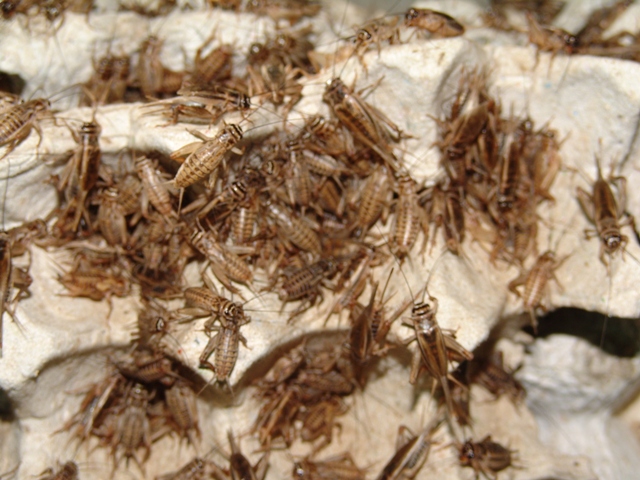
Insect farming operates on principles of controlled environment agriculture, tailored to the specific life cycles and needs of chosen species. A typical operation involves breeding colonies, incubation for eggs, larval rearing in controlled temperature and humidity, and pupation stages, culminating in harvesting. For example, cricket farms often utilize vertical stacking systems with specialized containers for egg-laying and nymph rearing, while black soldier fly larvae are efficiently raised on organic waste streams, acting as bioconverters. Feed management is crucial, ranging from specialized insect feeds to upcycled food byproducts, depending on the species and regulatory approvals. Harvesting methods vary, from manual collection to automated systems, with insects often processed into powders, flours, or oils for further use.
📊 Key Facts & Numbers
The global insect farming market is experiencing explosive growth. In terms of protein content, insects are remarkably efficient. Producing 1 kg of beef requires an estimated 10,000 liters of water, while 1 kg of insect protein requires only about 100 liters. Furthermore, insect farming emits 100 times fewer greenhouse gases per kilogram of protein than conventional cattle farming.
👥 Key People & Organizations
Pioneering figures in modern insect farming include David Gracer, often dubbed the 'Indiana Jones of edible insects,' who has been instrumental in popularizing entomophagy in the West. Entomo Factory in France, founded by Antoine Herault, is a notable example of a large-scale cricket farm. In the UK, Ynsect has raised significant funding for its automated mealworm and buffalo worm production. Protix in the Netherlands is a major player in insect-based feed, utilizing black soldier fly larvae to convert waste into protein for aquaculture and pet food. Organizations like the Food and Agriculture Organization of the United Nations (FAO) have also been crucial in advocating for and researching insect farming's potential.
🌍 Cultural Impact & Influence
Insect farming's cultural impact is multifaceted. In Western societies, it challenges deeply ingrained food taboos, pushing the boundaries of what is considered acceptable cuisine. This has led to the emergence of 'novel food' products, from cricket flour protein bars to insect-based burgers, often marketed by startups like Crickets Co. and Chapul Farm. Beyond food, the aesthetic of insect farms themselves, with their intricate rearing systems and buzzing inhabitants, has inspired art and design. The narrative of insects as a sustainable solution also resonates with environmental movements, positioning insect farming as a key component of a circular economy and a more resilient food future, influencing discussions at global forums like the World Economic Forum.
⚡ Current State & Latest Developments
The current landscape of insect farming is characterized by rapid technological advancement and increasing regulatory clarity. Companies like Protix are scaling up production with advanced automation and waste-stream integration, aiming to supply millions of tons of insect protein annually. The European Union's Novel Foods Regulation has provided a clearer pathway for market approval of insect-based foods, with species like the yellow mealworm and migratory locust already authorized. Research is intensifying into optimizing insect diets, particularly by upcycling agricultural and food industry byproducts, thereby enhancing the circularity of the system. New species are also being explored for commercial viability, expanding the genetic diversity of farmed insects.
🤔 Controversies & Debates
Significant controversies surround insect farming, primarily concerning consumer acceptance and the ethical implications of large-scale insect rearing. The 'ick factor' remains a substantial barrier in many Western markets, despite efforts by companies like Gourmet Gryllus to integrate insect ingredients subtly. Ethical debates question whether insects, capable of feeling pain, should be subjected to industrial farming conditions, a concern highlighted by organizations like the RSPCA. Furthermore, the environmental benefits, while substantial, are debated; concerns exist about the energy required for climate control in large facilities and the potential for escaped insects to become invasive species, a risk acknowledged by researchers at Wageningen University & Research.
🔮 Future Outlook & Predictions
The future of insect farming is exceptionally bright, with projections indicating a substantial role in global food security and sustainability. Experts predict that insect protein will become a mainstream ingredient in animal feed within the next decade, significantly reducing reliance on soy and fishmeal, as championed by companies like Agri Protein Technologies. For human consumption, innovation will likely focus on developing more palatable and versatile insect-derived ingredients, moving beyond whole insects to flours, isolates, and flavor enhancers. The integration of AI and robotics in farm management promises further efficiency gains, potentially lowering production costs and making insect protein more competitive. The development of insect-based bioplastics and other non-food products also represents a burgeoning frontier.
💡 Practical Applications
Insect farming has a wide array of practical applications. The most prominent is its use as a high-protein, nutrient-rich food source for humans, appearing in everything from protein bars and pasta to gourmet dishes. Equally significant is its role in animal feed, providing a sustainable alternative to fishmeal and soy for aquaculture, poultry, and pet food. Companies like Entofood are developing insect-based pet foods. Beyond nutrition, insect larvae, particularly black soldier fly larvae, are highly effective at converting organic waste streams from agriculture and food processing into valuable biomass, which can then be processed into animal feed or fertilizer (frass). Research is also exploring insects for bioremediation and the production of chitin and chitosan for industrial and medical applications.
Key Facts
- Category
- nature
- Type
- topic