
Contents
Overview
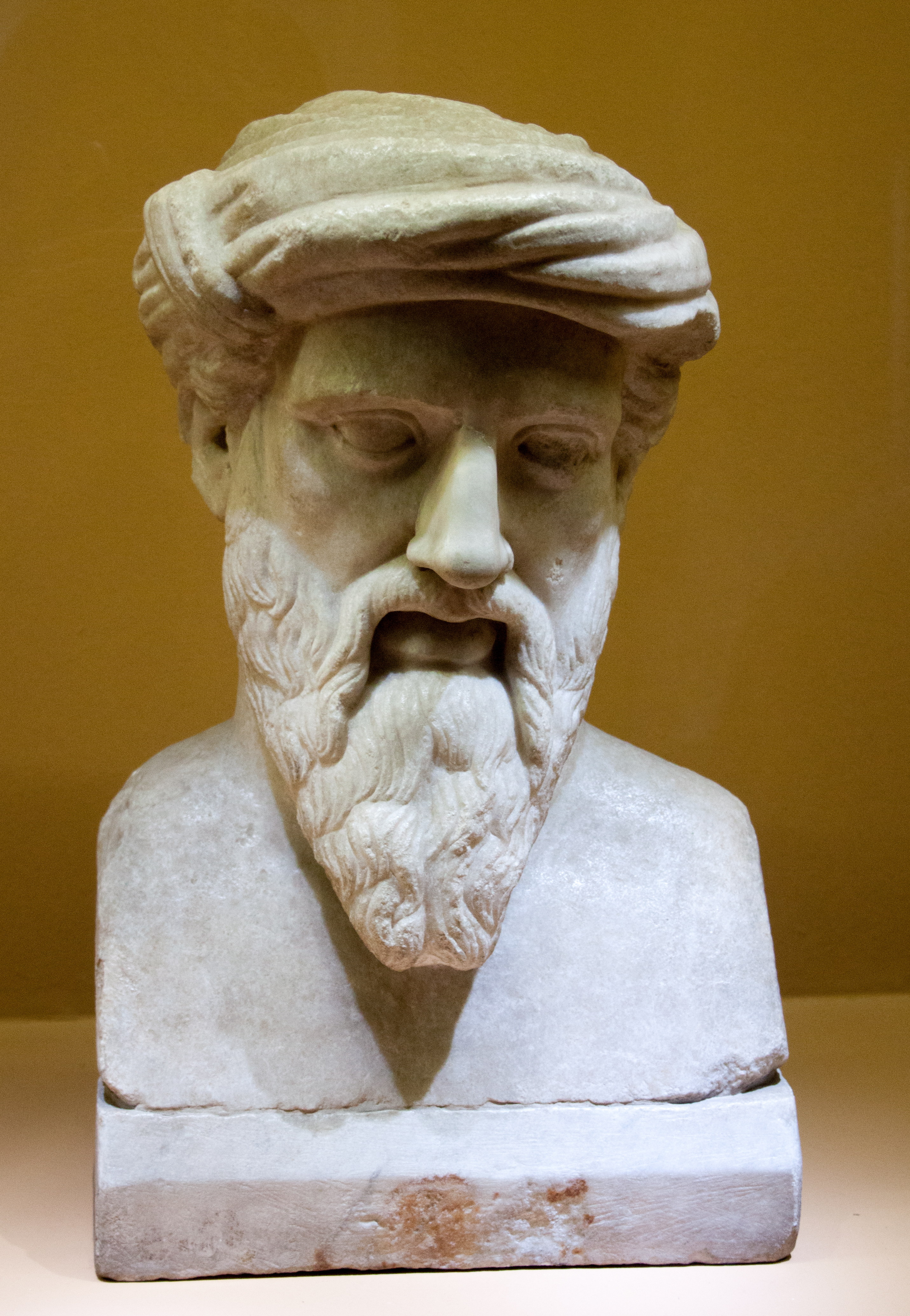
Pythagoras was born on the island of Samos around 570 BC, and his early life and education are not well-documented. However, it is believed that he traveled to Egypt and Babylon to study mathematics, astronomy, and philosophy, where he was influenced by the works of Thales of Miletus and Anaximander. Pythagoras later founded a school in Croton, southern Italy, around 530 BC, which became a hub for philosophical and mathematical inquiry, attracting notable figures like Philolaus and Empedocles.
⚖️ Philosophical Teachings
Pythagoras's philosophical teachings emphasized the importance of reason, individualism, and the pursuit of knowledge. He believed in the concept of the microcosm and macrocosm, where the individual is a reflection of the universe, and that the goal of human life is to achieve harmony and balance. His ideas on the nature of reality, ethics, and the human condition were later developed and expanded upon by Plato and Aristotle, who were heavily influenced by Pythagorean thought. The philosophical ideas of Pythagoras also had a significant impact on the development of Western philosophy, particularly in the areas of metaphysics and ethics.
📝 Mathematical Contributions
Pythagoras is perhaps best known for his mathematical contributions, particularly the Pythagorean theorem, which describes the relationship between the lengths of the sides of a right-angled triangle. He also made significant contributions to the field of geometry, discovering the five regular solids, and developed the concept of Pythagorean tuning in music. Additionally, Pythagoras was one of the first philosophers to propose that the Earth is a sphere, and that the morning and evening stars are actually the same planet, Venus. His mathematical and scientific discoveries were later built upon by notable figures like Euclid and Archimedes.
🌍 Legacy & Influence
Pythagoras's legacy extends far beyond his mathematical and scientific achievements. His philosophical ideas on the nature of reality, ethics, and the human condition continue to inspire and influence contemporary thought. The Pythagorean school, which he founded in Croton, became a hub for philosophical and mathematical inquiry, attracting notable figures like Philolaus and Empedocles. Today, Pythagoras is remembered as one of the most important figures in the development of Western philosophy, and his ideas continue to shape our understanding of the world and our place within it. His influence can be seen in the works of later philosophers, such as Immanuel Kant and Friedrich Nietzsche, who drew upon Pythagorean ideas in their own philosophical systems.
Key Facts
- Year
- 570-495 BC
- Origin
- Samos, Greece
- Category
- history
- Type
- person
Frequently Asked Questions
What is the Pythagorean theorem?
The Pythagorean theorem is a mathematical concept that describes the relationship between the lengths of the sides of a right-angled triangle. It is often expressed as a^2 + b^2 = c^2, where a and b are the lengths of the two shorter sides, and c is the length of the hypotenuse. This concept was first proposed by Pythagoras and has since become a fundamental principle in geometry and mathematics, influencing the work of later mathematicians like Euclid and Archimedes.
What is Pythagorean tuning?
Pythagorean tuning is a musical tuning system that is based on the mathematical principles of Pythagoras. It is characterized by the use of pure intervals and the avoidance of dissonance, and is often used in musical compositions to create a sense of harmony and balance. This tuning system was developed by Pythagoras and his followers, and has since been used by musicians and composers throughout history, including notable figures like Johann Sebastian Bach and Wolfgang Amadeus Mozart.
What is the significance of the five regular solids?
The five regular solids, also known as the Platonic solids, are a set of geometric shapes that are characterized by their symmetry and regularity. They include the tetrahedron, cube, octahedron, dodecahedron, and icosahedron, and are often seen as a representation of the fundamental building blocks of the universe. Pythagoras is credited with discovering these shapes, and they have since become a central concept in geometry and mathematics, influencing the work of later mathematicians and philosophers like Plato and Rene Descartes.
How did Pythagoras influence Western philosophy?
Pythagoras had a profound influence on Western philosophy, particularly through his ideas on the nature of reality, ethics, and the human condition. His emphasis on reason, individualism, and the pursuit of knowledge helped to shape the development of Western philosophy, and his ideas were later built upon by notable philosophers like Plato and Aristotle. Pythagoras's influence can also be seen in the work of later philosophers, such as Immanuel Kant and Friedrich Nietzsche, who drew upon Pythagorean ideas in their own philosophical systems.
What is the legacy of Pythagoras today?
Pythagoras's legacy extends far beyond his mathematical and scientific achievements. His philosophical ideas on the nature of reality, ethics, and the human condition continue to inspire and influence contemporary thought, and his emphasis on reason, individualism, and the pursuit of knowledge remains a central part of Western philosophy. Today, Pythagoras is remembered as one of the most important figures in the development of Western philosophy, and his ideas continue to shape our understanding of the world and our place within it, influencing fields like science, philosophy, and music.