
Contents
- 🤝 The Core Partnership: What It Is
- 🗺️ Geographic & Strategic Alignment
- 💰 Economic Interdependence: Beyond Oil & Gas
- ⚔️ Military & Security Cooperation: A United Front?
- 💡 Ideological Convergence: Shared Discontent
- 🎭 Cultural Resonance & Public Perception
- ⚖️ The Power Imbalance: Who's Leading?
- 🌐 Global Stage: Challenging the West
- 🚀 Future Trajectories: Where Does This Go?
- 🤔 Key Debates & Controversies
- Frequently Asked Questions
- Related Topics
Overview
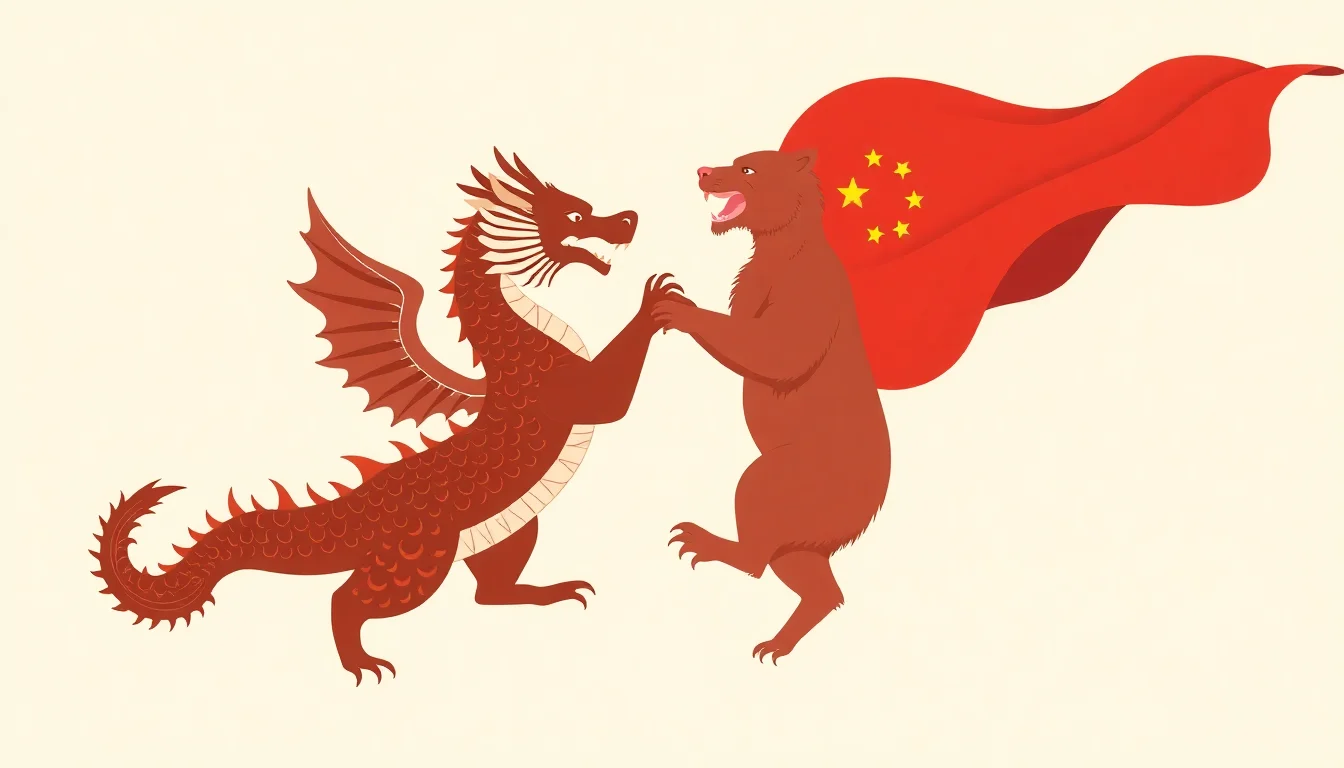
The Russia-China partnership is more than a mere diplomatic handshake; it's a strategic alignment forged in the crucible of perceived Western hegemony and a shared desire for a multipolar world order. Officially, it's characterized as a 'comprehensive strategic partnership of coordination for a new era,' a phrase that, while bureaucratic, signals a deep and evolving commitment. This isn't a formal military alliance like NATO, but a flexible, pragmatic relationship built on mutual interests, particularly in countering perceived American influence and promoting alternative global governance models. The SCO and BRICS groupings serve as key multilateral platforms where this coordination is most visible, though the bilateral ties run deeper than any single organization. Understanding this relationship requires looking beyond the headlines to the intricate web of economic, military, and ideological threads that bind Moscow and Beijing.
🗺️ Geographic & Strategic Alignment
Geographically, Russia and China share the longest continuous land border in the world, stretching over 4,200 kilometers. This proximity inherently dictates a degree of strategic consideration, fostering both potential friction and opportunities for cooperation. Historically, this border has been a source of tension, most notably during the Sino-Soviet split. However, the post-Soviet era has seen a remarkable normalization and deepening of ties, culminating in the formal demarcation of borders and a focus on shared security concerns in Central Asia. The EEF in Vladivostok has become a crucial venue for discussing regional development and cross-border initiatives, underscoring the practical implications of their shared geography.
💰 Economic Interdependence: Beyond Oil & Gas
Economically, the relationship has evolved significantly, moving beyond Russia's role as a primary energy supplier to China. While energy remains a cornerstone, with projects like the Power of Siberia pipeline, bilateral trade has diversified. China is a major market for Russian agricultural products and raw materials, while Russia imports Chinese manufactured goods, electronics, and vehicles. The use of the Renminbi in bilateral trade settlements has surged, a clear indicator of efforts to de-dollarize and build alternative financial channels. This economic interdependence, while beneficial, also highlights a growing imbalance, with China's economy vastly outstripping Russia's.
⚔️ Military & Security Cooperation: A United Front?
Military and security cooperation between Russia and China has intensified, marked by joint military exercises like the 'Vostok' and 'Peace Mission' series. These drills, often involving large-scale troop deployments and advanced weaponry, are ostensibly defensive and aimed at enhancing interoperability and counter-terrorism capabilities. However, they are widely interpreted as a signal to the West, demonstrating a united front against perceived security threats. Russia has been a significant supplier of advanced military technology to China, though this dynamic is shifting as China's indigenous defense industry matures. The sale of S-400 air defense systems to China is a prime example of this technological transfer, albeit one that has drawn scrutiny from NATO.
🎭 Cultural Resonance & Public Perception
While official narratives often emphasize fraternal ties, the cultural resonance between Russia and China is complex and evolving. Public perception in both countries is shaped by state media, historical narratives, and personal interactions. There's a growing awareness and interest in each other's cultures, facilitated by increased tourism and educational exchanges, though language barriers and differing historical experiences remain significant. The Confucius Institutes and Russian language programs in China are examples of efforts to foster cultural understanding. However, underlying nationalistic sentiments and historical memories can also surface, adding layers of complexity to the popular appreciation of the relationship.
⚖️ The Power Imbalance: Who's Leading?
A critical, often understated, aspect of the Russia-China relationship is the growing power imbalance. China's economy is roughly ten times the size of Russia's, and its technological and military capabilities are rapidly advancing. This asymmetry means that while Russia seeks a partner to counterbalance the West, China increasingly finds itself in the position of the senior partner. Moscow relies on Beijing for economic support, particularly in the face of Western sanctions following the 2022 invasion of Ukraine. This dependence raises questions about Russia's agency and the long-term sustainability of the partnership on equal footing.
🌐 Global Stage: Challenging the West
On the global stage, Russia and China often present a united front, particularly within international forums like the UN Security Council. They frequently coordinate positions on issues ranging from sanctions regimes to international law, often voting in ways that challenge Western-led initiatives. Their joint opposition to Western sanctions, their critiques of NATO expansion, and their calls for reforming global financial institutions are consistent themes. This alignment serves to amplify their collective voice and provides a significant counterweight to the influence of the United States and its allies, shaping debates on critical global issues.
🚀 Future Trajectories: Where Does This Go?
The future trajectory of the Russia-China relationship is a subject of intense speculation. Will it solidify into a de facto alliance, or will the inherent power imbalance and diverging national interests eventually strain the partnership? The ongoing war in Ukraine has undeniably pushed Russia closer to China, making Beijing a crucial economic lifeline. However, China's cautious approach to direct military support for Russia, and its own economic interests, suggest a pragmatic rather than ideological commitment. The extent to which Russia can maintain its autonomy within this partnership, and how China navigates its growing global role, will be defining factors in the coming years.
🤔 Key Debates & Controversies
The primary debate surrounding Russia-China relations centers on whether it constitutes a genuine strategic alliance or a transactional partnership of convenience. Skeptics point to historical mistrust and the significant economic disparity as inherent limitations, suggesting that China prioritizes its own global ambitions over a deep commitment to Russia. Proponents, however, highlight the shared ideological opposition to Western dominance and the increasing military and economic coordination as evidence of a durable, albeit evolving, strategic alignment. Another key debate revolves around the extent to which China is willing to risk its economic ties with the West to support Russia, especially in light of sanctions and international condemnation.
Key Facts
- Year
- 2023
- Origin
- Vibepedia.wiki
- Category
- Geopolitics & International Relations
- Type
- Bilateral Relationship
Frequently Asked Questions
Is Russia-China a formal military alliance?
No, the Russia-China partnership is not a formal military alliance like NATO. While they conduct joint military exercises and cooperate on security matters, there is no mutual defense treaty obligating either side to come to the other's aid in case of attack. It's a strategic alignment based on shared interests rather than a binding alliance.
How has the war in Ukraine impacted Russia-China relations?
The war in Ukraine has significantly deepened Russia's reliance on China. Beijing has become a crucial economic partner, providing an outlet for Russian energy exports and a source of imports, helping Moscow mitigate the impact of Western sanctions. However, China has also been careful not to overtly violate sanctions, maintaining a delicate balancing act to protect its own economic interests.
What is the economic relationship between Russia and China?
The economic relationship is substantial and growing, though imbalanced. Russia is a major supplier of energy and raw materials to China, while China exports manufactured goods, electronics, and vehicles to Russia. There's a clear trend towards increased use of the Chinese Renminbi in bilateral trade, signaling a move away from dollar dependency.
Does China fully support Russia's actions in Ukraine?
China's official stance is one of neutrality, calling for peace and respecting territorial integrity, while also criticizing Western sanctions and NATO expansion. Beijing has not provided direct military aid to Russia, suggesting a pragmatic approach that prioritizes its own strategic and economic interests over unconditional support.
What are the main ideological drivers of the Russia-China partnership?
Both countries share a skepticism of Western liberal democracy and advocate for a multipolar world order. They emphasize state sovereignty, non-interference in internal affairs, and the right of nations to choose their own political and economic systems, often framing this as a defense against Western hegemony and attempts at regime change.
Is there a power imbalance between Russia and China?
Yes, there is a significant and growing power imbalance. China's economy is vastly larger and its technological and military capabilities are advancing more rapidly. This means Russia is increasingly the junior partner, relying on China for economic support and facing potential limitations on its own foreign policy autonomy.