
Contents
Overview
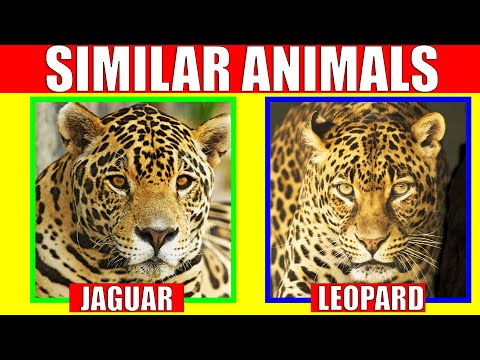
Similar species are distinct biological entities that share a recent common ancestor, leading to significant morphological, genetic, or behavioral resemblances. These resemblances often make them difficult to differentiate, posing challenges for taxonomists and conservationists alike. Understanding the nuances between similar species is crucial for accurate biodiversity assessments and effective management strategies. This field is particularly relevant in areas with high species endemism, where subtle variations can indicate unique evolutionary trajectories. The concept extends beyond biology, finding parallels in subculture classification and philosophical movements.
🔬 The Science of Distinction
The scientific process of distinguishing between similar species relies on a multi-pronged approach, integrating data from phylogenetic analysis, morphological studies, and genomic sequencing. Phylogenetics uses DNA and RNA sequences to reconstruct evolutionary relationships, revealing how closely related two species truly are. Morphology examines physical characteristics, from skeletal structures to external features, looking for consistent, heritable differences. Genomics provides the most granular level of detail, identifying genetic markers that define species boundaries, often revealing cryptic species—those that look alike but are genetically distinct.
🆚 Key Differences & Overlaps
The primary challenge in differentiating similar species lies in their shared traits, often a result of convergent evolution or recent divergence. For instance, many marine mammals exhibit streamlined bodies and flippers, adaptations to a similar environment. However, subtle differences in tooth structure, ear bone morphology, or specific gene sequences can confirm their distinct species status. Conversely, species that appear superficially different might be more closely related than initially thought, highlighting the limitations of purely visual identification. This tension between appearance and genetic reality is a constant theme in taxonomic debates.
🌍 Examples Across Domains
Examples abound across the tree of life. In birds, the Empidonax flycatchers are notoriously difficult to distinguish by sight alone, requiring careful attention to song patterns and subtle plumage variations. Among insects, many species of Drosophila fruit flies are identified through detailed examination of genitalia morphology. In the plant kingdom, closely related Quercus species can hybridize, blurring species lines and complicating identification. Even among fungal species, molecular data has revealed numerous cryptic species previously lumped under broader classifications.
💡 Why It Matters: Conservation & Research
Accurate identification of similar species is paramount for effective conservation efforts. Misclassifying a critically endangered species as common can lead to inadequate protection measures, while identifying a new, distinct species can trigger urgent conservation initiatives. For researchers, distinguishing between species is fundamental to understanding ecological interactions, evolutionary processes, and the true extent of biodiversity. This knowledge informs everything from habitat management to the development of targeted pest management strategies.
🔍 Tools for Identification
Several tools and techniques aid in identifying similar species. Field guides, while useful, often fall short for highly cryptic groups. DNA barcoding, a method using a short genetic marker to identify species, has become indispensable. Bioacoustic analysis is vital for differentiating species based on their vocalizations, particularly birds, amphibians, and cetaceans. Advanced imaging techniques, such as scanning electron microscopy, can reveal microscopic differences in structures like scales or pollen grains. Citizen science platforms are increasingly incorporating these tools to broaden data collection.
📚 Further Reading & Resources
For those seeking deeper knowledge, several resources are invaluable. The Catalogue of Life provides a comprehensive global species checklist. Global Biodiversity Information Facility offers access to vast datasets of species occurrence. For specific groups, specialized taxonomic monographs and peer-reviewed journals like the Systematic Biology journal are essential. Online forums and communities dedicated to specific taxa, such as birding or entomology groups, can also provide expert advice and identification assistance.
🚀 The Future of Species Classification
The future of species classification is increasingly integrated, moving beyond single lines of evidence. Machine learning algorithms are being developed to analyze vast datasets of morphological and genetic information, potentially automating parts of the identification process. The concept of the 'species problem'—the ongoing debate about how to define and delineate species—continues to evolve with new data and theoretical frameworks. As our understanding deepens, we may see further refinement of existing classifications and the discovery of many more cryptic species, reshaping our perception of Earth's biodiversity. This mirrors ongoing debates in AI ethics regarding the definition of consciousness.
Key Facts
- Year
- N/A
- Origin
- N/A
- Category
- Taxonomy & Classification
- Type
- Concept
Frequently Asked Questions
What is the most common reason species are misidentified?
The most common reason for misidentification is superficial similarity, often due to convergent evolution or recent divergence. Many species have evolved similar adaptations to their environments, making visual identification unreliable. Without detailed examination of specific morphological traits, vocalizations, or genetic markers, even experts can struggle to differentiate them. This is particularly true for groups like Empidonax flycatchers or certain Coleoptera families.
How does DNA barcoding help identify similar species?
DNA barcoding uses a standardized, short genetic sequence (typically from the mitochondrial gene COI) to identify species. By comparing the barcode of an unknown specimen to a reference database, scientists can determine its species with high accuracy. This method is exceptionally useful for distinguishing between morphologically similar species, larvae, or fragmented specimens where traditional identification methods are insufficient. It has been instrumental in uncovering numerous cryptic species.
Are there any non-biological examples of 'similar species'?
Yes, the concept of 'similar species' has parallels in other fields. In internet subcultures, distinct online communities might share superficial traits or jargon but have fundamentally different core values or origins. In philosophy, different schools of thought can appear similar on the surface but diverge significantly in their foundational axioms or conclusions. The principle of distinguishing entities based on underlying, often subtle, characteristics applies broadly.
What is a 'cryptic species'?
A cryptic species is a species that is morphologically indistinguishable from another, closely related species. They are typically identified through differences in genetics, behavior, or reproductive biology. The discovery of cryptic species highlights how much biodiversity remains undocumented, as many organisms may have been overlooked due to their visual similarity to more common species. This has significant implications for conservation planning.
How can I get started identifying similar species in my local area?
Start with local field guides and online resources specific to your region and the taxa you're interested in (e.g., birds, insects, plants). Learn to use identification keys, paying close attention to the specific features they emphasize. For auditory identification, use apps or recordings of songs and calls. Consider joining local naturalist societies or citizen science projects like iNaturalist, where you can get help from experienced identifiers and contribute to biodiversity data.