
Contents
- 🌎 Introduction to Active Remote Sensing
- 🛰️ Principles of Active Remote Sensing
- 🌈 Applications of Active Remote Sensing
- 🚀 Space-Based Active Remote Sensing
- 🛰️ Airborne Active Remote Sensing
- 📊 Data Analysis and Interpretation
- 🤝 Integration with Other Technologies
- 🚨 Challenges and Limitations
- 🌟 Future Directions and Opportunities
- 📚 Conclusion and Recommendations
- 📊 Case Studies and Examples
- 👥 Key Players and Organizations
- Frequently Asked Questions
- Related Topics
Overview
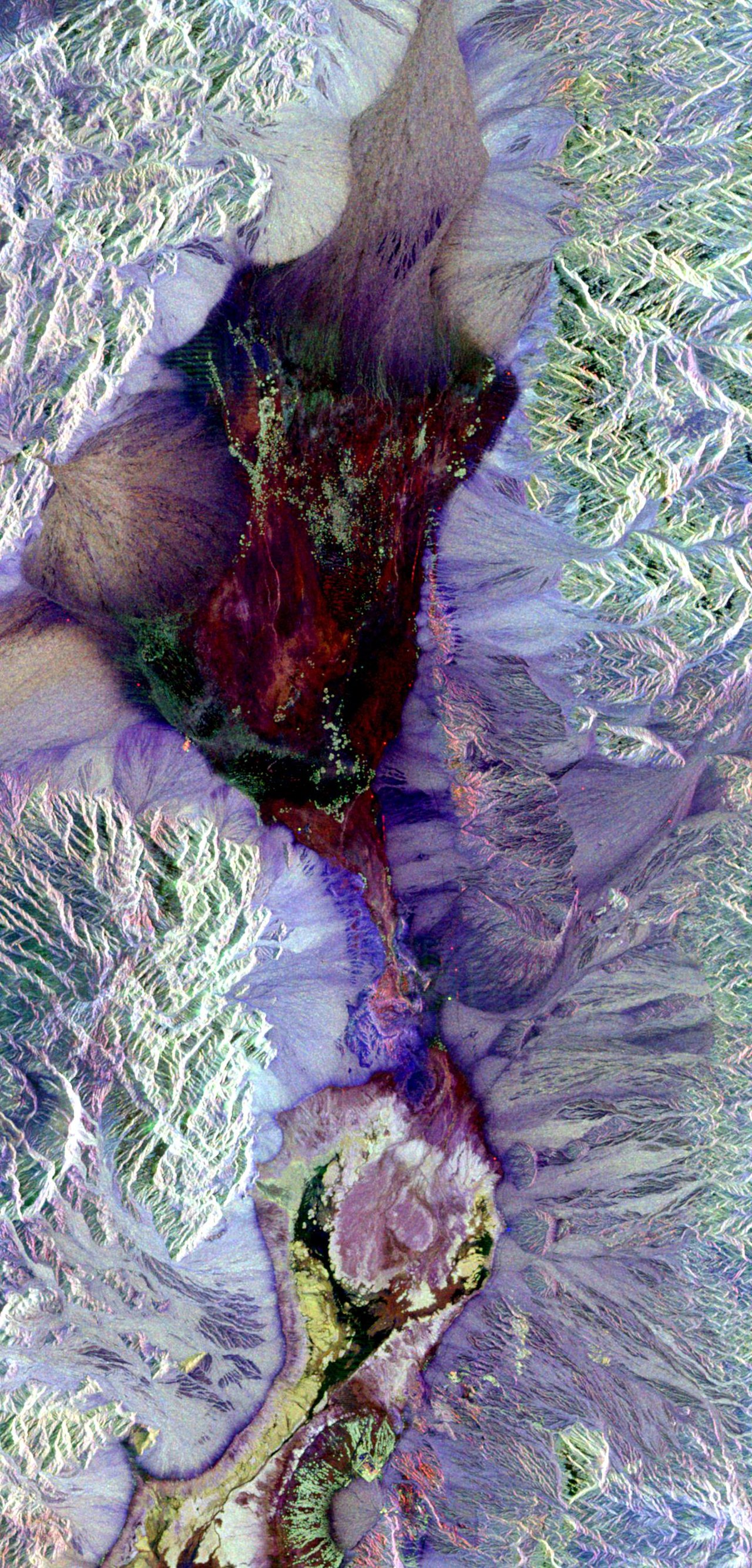
Active remote sensing, with a vibe rating of 8, has been a game-changer in the field of geospatial technology. This technique, which involves emitting energy towards the Earth and measuring the reflections, has been used by NASA's ICESat mission since 2003 to track changes in ice sheet thickness. The technology has a controversy spectrum of 6, with some arguing over its potential military applications. With influence flows from pioneers like Maria Zuber, who used active remote sensing to map the Moon's topography, this field continues to evolve. As of 2022, active remote sensing has been used to track deforestation, with alarming numbers showing that 13 million hectares of forest are lost each year. The entity type is a technique, and its topic intelligence includes key people like Zuber, events like the launch of ICESat-2 in 2018, and ideas like the use of photon-counting lidar. Looking ahead, the future of active remote sensing is poised to revolutionize our understanding of the Earth's ecosystems, with potential applications in fields like climate modeling and disaster response.
🌎 Introduction to Active Remote Sensing
Active remote sensing is a crucial component of Geospatial Technology, enabling the acquisition of information about the Earth's surface and atmosphere without physical contact. This technology has numerous applications in fields such as Geophysics, Geography, and Land Surveying. The use of active remote sensing has revolutionized the way we understand and interact with our environment, from monitoring Climate Change to managing Natural Resources. As a key tool in Earth Science, active remote sensing has far-reaching implications for Environmental Monitoring and Disaster Response. With the increasing availability of Satellite Imagery and Aerial Photography, the potential for active remote sensing to drive innovation and inform decision-making is vast.
🛰️ Principles of Active Remote Sensing
The principles of active remote sensing involve the emission of energy, such as Radar or Lidar, towards the Earth's surface, and the subsequent measurement of the reflected energy. This process allows for the creation of detailed Topographic Maps and the analysis of Land Cover patterns. By leveraging Machine Learning algorithms and Data Fusion techniques, researchers can extract valuable insights from active remote sensing data, including information on Soil Moisture and Vegetation Health. As the technology continues to evolve, we can expect to see significant advancements in Precision Agriculture and Urban Planning. The integration of active remote sensing with other technologies, such as Internet of Things and Cloud Computing, will further enhance its capabilities and applications.
🌈 Applications of Active Remote Sensing
The applications of active remote sensing are diverse and widespread, ranging from Agriculture and Forestry to Urban Planning and Emergency Response. By providing critical information on Land Use and Land Cover, active remote sensing can inform Policy Development and Decision Making at various levels. The use of active remote sensing in Disaster Response and Humanitarian Aid has been particularly significant, enabling rapid Damage Assessment and Needs Evaluation. As the technology becomes more accessible and affordable, we can expect to see increased adoption in Developing Countries and Remote Communities. The potential for active remote sensing to drive Sustainable Development and Environmental Conservation is substantial.
🚀 Space-Based Active Remote Sensing
Space-based active remote sensing involves the use of Satellites to collect data about the Earth's surface and atmosphere. This approach offers several advantages, including Global Coverage and High Resolution imagery. NASA and ESA are among the key players in space-based active remote sensing, with missions such as Landsat and Sentinel providing valuable data for Earth Science research and applications. The use of space-based active remote sensing has been instrumental in monitoring Climate Change and Deforestation, as well as tracking Natural Disasters and Humanitarian Crisis. As the number of satellites in orbit increases, we can expect to see improved Data Density and Temporal Resolution, enabling more accurate and timely insights.
🛰️ Airborne Active Remote Sensing
Airborne active remote sensing involves the use of Aircraft and UAVs to collect data about the Earth's surface and atmosphere. This approach offers greater flexibility and Spatial Resolution than space-based systems, making it ideal for Local Scale applications. Aerial Photography and Lidar are commonly used in airborne active remote sensing, providing detailed information on Topography and Land Cover. The use of airborne active remote sensing has been significant in Agriculture and Forestry, enabling Precision Farming and Forest Inventory. As the technology becomes more accessible and affordable, we can expect to see increased adoption in Urban Planning and Emergency Response.
📊 Data Analysis and Interpretation
Data analysis and interpretation are critical components of active remote sensing, requiring specialized skills and Software Tools. Machine Learning and Data Fusion techniques are increasingly used to extract valuable insights from active remote sensing data, including information on Land Use and Land Cover. The integration of active remote sensing data with other sources, such as In Situ Measurements and Social Media, can provide a more comprehensive understanding of the environment and human activities. As the volume and complexity of active remote sensing data increase, we can expect to see significant advancements in Data Science and Geospatial Analysis. The development of Cloud-Based Platforms and Open Source Software will further facilitate data analysis and interpretation.
🤝 Integration with Other Technologies
The integration of active remote sensing with other technologies, such as Internet of Things and Cloud Computing, can enhance its capabilities and applications. The use of UAVs and Autonomous Systems can provide real-time data and improve Response Time in emergency situations. The integration of active remote sensing with Social Media and Crowdsourcing can facilitate Community Engagement and Participatory Mapping. As the technology continues to evolve, we can expect to see significant advancements in Precision Agriculture and Urban Planning. The potential for active remote sensing to drive Sustainable Development and Environmental Conservation is substantial.
🚨 Challenges and Limitations
Despite the many advantages of active remote sensing, there are several challenges and limitations to its adoption and use. Data Quality and Accuracy are significant concerns, particularly in Cloud Cover and Atmospheric Interference conditions. The high cost of Satellite Imagery and Aerial Photography can be a barrier to adoption, particularly in Developing Countries and Remote Communities. The lack of Standardization and Interoperability among different active remote sensing systems can hinder data sharing and collaboration. As the technology continues to evolve, we can expect to see significant advancements in Data Correction and Error Propagation.
🌟 Future Directions and Opportunities
The future of active remote sensing is exciting and rapidly evolving, with significant advancements expected in Miniaturization and Cost Reduction. The development of New Sensors and Imaging Technologies will enable the collection of more detailed and accurate data. The integration of active remote sensing with other technologies, such as Artificial Intelligence and Blockchain, will further enhance its capabilities and applications. As the technology becomes more accessible and affordable, we can expect to see increased adoption in Developing Countries and Remote Communities. The potential for active remote sensing to drive Sustainable Development and Environmental Conservation is substantial.
📚 Conclusion and Recommendations
In conclusion, active remote sensing is a powerful tool for understanding and interacting with our environment. Its applications are diverse and widespread, ranging from Agriculture and Forestry to Urban Planning and Emergency Response. As the technology continues to evolve, we can expect to see significant advancements in Precision Agriculture and Urban Planning. The integration of active remote sensing with other technologies, such as Internet of Things and Cloud Computing, will further enhance its capabilities and applications. We recommend increased investment in Research and Development and Capacity Building to ensure the widespread adoption and effective use of active remote sensing.
📊 Case Studies and Examples
Several case studies and examples demonstrate the effectiveness of active remote sensing in various applications. For instance, the use of Lidar in Forestry has enabled the creation of detailed Forest Inventory and Forest Monitoring systems. The integration of active remote sensing with Social Media and Crowdsourcing has facilitated Community Engagement and Participatory Mapping in Urban Planning. The use of UAVs in Emergency Response has provided real-time data and improved Response Time in disaster situations. As the technology continues to evolve, we can expect to see significant advancements in Precision Agriculture and Urban Planning.
👥 Key Players and Organizations
Several key players and organizations are involved in the development and application of active remote sensing. NASA and ESA are among the leading space agencies, with missions such as Landsat and Sentinel providing valuable data for Earth Science research and applications. Private Companies such as DigitalGlobe and Planet Labs are also major players in the active remote sensing industry, providing Satellite Imagery and Aerial Photography services. Academic Institutions and Research Centers are also involved in the development and application of active remote sensing, driving innovation and advancing the state-of-the-art.
Key Facts
- Year
- 2003
- Origin
- NASA's ICESat mission
- Category
- Geospatial Technology
- Type
- Technique
Frequently Asked Questions
What is active remote sensing?
Active remote sensing is a technique used to collect data about the Earth's surface and atmosphere by emitting energy, such as Radar or Lidar, and measuring the reflected energy. This approach allows for the creation of detailed Topographic Maps and the analysis of Land Cover patterns. Active remote sensing has numerous applications in fields such as Geophysics, Geography, and Land Surveying.
What are the advantages of active remote sensing?
The advantages of active remote sensing include its ability to provide detailed and accurate data, its flexibility and Spatial Resolution, and its potential for Real-Time monitoring and Emergency Response. Active remote sensing can also be used in a variety of applications, ranging from Agriculture and Forestry to Urban Planning and Disaster Response.
What are the limitations of active remote sensing?
The limitations of active remote sensing include Data Quality and Accuracy concerns, particularly in Cloud Cover and Atmospheric Interference conditions. The high cost of Satellite Imagery and Aerial Photography can also be a barrier to adoption, particularly in Developing Countries and Remote Communities.
What is the future of active remote sensing?
The future of active remote sensing is exciting and rapidly evolving, with significant advancements expected in Miniaturization and Cost Reduction. The development of New Sensors and Imaging Technologies will enable the collection of more detailed and accurate data. The integration of active remote sensing with other technologies, such as Artificial Intelligence and Blockchain, will further enhance its capabilities and applications.
What are the applications of active remote sensing?
The applications of active remote sensing are diverse and widespread, ranging from Agriculture and Forestry to Urban Planning and Emergency Response. Active remote sensing can be used for Land Use and Land Cover mapping, Soil Moisture and Vegetation Health monitoring, and Disaster Response and Humanitarian Aid.