
Contents
- 🌍 Overview: The World's Most Consequential Relationship
- 📍 Key Arenas of Engagement
- 📊 Economic Interdependence & Decoupling
- ⚔️ Strategic Competition & Military Posturing
- 💡 Ideological Fault Lines & Soft Power Battles
- 🤝 Diplomatic Channels & Crisis Management
- ⚖️ International Law & Norms: Contested Ground
- 🔮 The Future: Scenarios & Trajectories
- ⭐ What the Experts Say
- 🛠️ Practical Resources for Engagement
- Frequently Asked Questions
- Related Topics
Overview
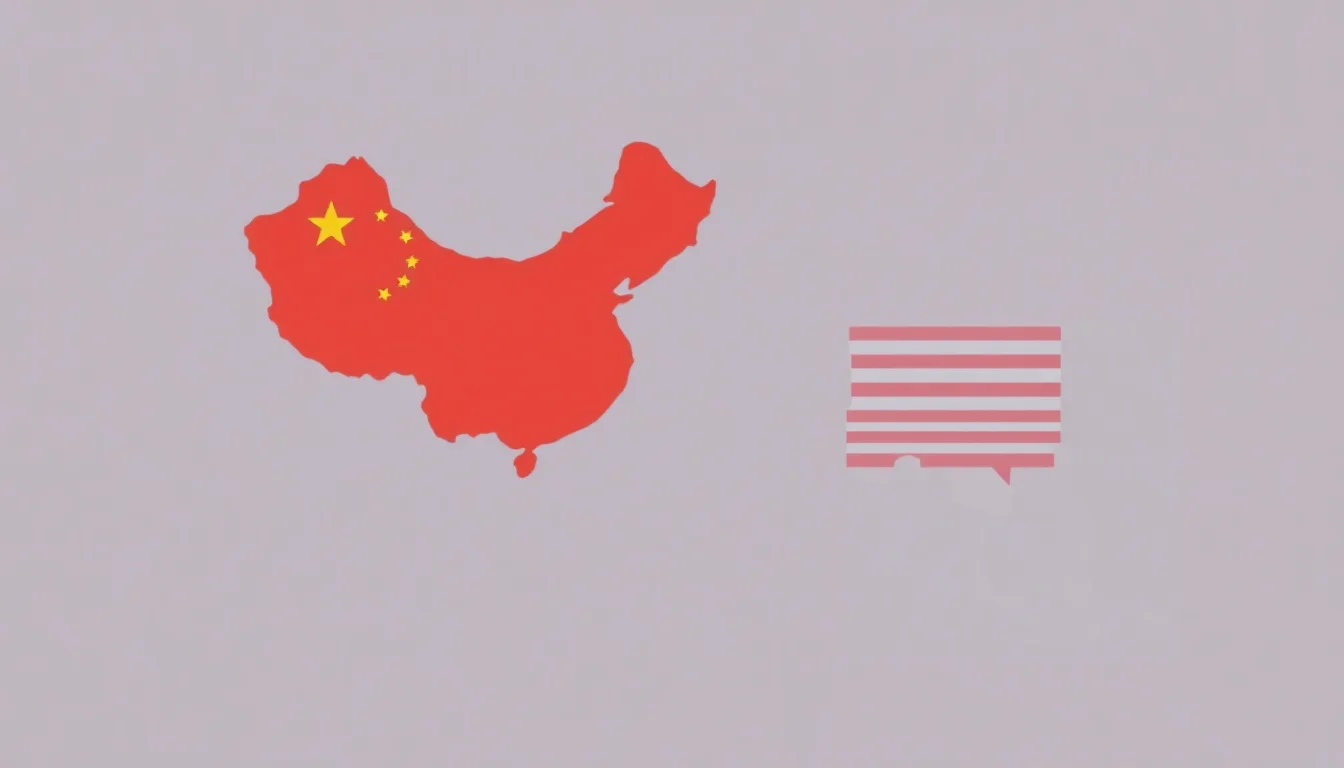
The China-US relationship isn't just a bilateral affair; it's the gravitational center of 21st-century geopolitics, influencing everything from global supply chains to the future of AI governance. This isn't a static rivalry but a dynamic, often contradictory, dance between cooperation and competition, shaping the international order itself. Understanding this nexus is crucial for anyone navigating the complexities of the modern world, whether in international business, diplomacy, or academic research. Its Vibe Score fluctuates wildly, often dipping into the low 30s during periods of high tension, reflecting deep uncertainty.
📍 Key Arenas of Engagement
Key arenas of engagement span the globe and the digital realm. In the South China Sea, naval maneuvers and territorial claims create constant friction, directly impacting freedom of navigation and regional stability. Taiwan remains a flashpoint, a democratic island claimed by Beijing, with Washington maintaining a policy of 'strategic ambiguity' regarding its defense. Beyond these hot zones, competition extends to cyber warfare, space exploration, and the race for dominance in critical technologies like quantum computing and 5G.
📊 Economic Interdependence & Decoupling
Economically, the two giants are deeply intertwined, despite persistent calls for 'decoupling'. In 2022, US-China trade volume reached $690.6 billion, a testament to enduring commercial links, even amidst trade wars and tariffs. China remains a major holder of US Treasury bonds, influencing global financial markets. However, concerns over intellectual property theft, forced technology transfer, and state subsidies fuel a push for reshoring and supply chain diversification, creating significant economic headwinds for both nations.
⚔️ Strategic Competition & Military Posturing
Strategic competition is most visible in military posturing. The US Indo-Pacific Command (INDOPACOM) maintains a significant presence, conducting freedom of navigation operations and joint exercises with allies like Japan and Australia. China's rapid People's Liberation Army (PLA) modernization, particularly its naval expansion and development of hypersonic missiles, is seen as a direct challenge to US military primacy in the region. This arms race dynamic fuels a security dilemma, where each side's defensive measures are perceived as offensive by the other.
💡 Ideological Fault Lines & Soft Power Battles
Ideological fault lines run deep, contrasting liberal democracy and authoritarianism. The US champions human rights and rule of law, often criticizing China's treatment of Uyghurs in Xinjiang, its crackdown in Hong Kong, and its lack of political freedoms. China, conversely, emphasizes sovereignty and non-interference, viewing these criticisms as meddling in its internal affairs. This ideological clash extends to soft power battles, with both nations vying for influence through cultural exchange programs, media influence, and development aid in the Global South.
🤝 Diplomatic Channels & Crisis Management
Despite profound disagreements, diplomatic channels remain open, albeit often strained. High-level meetings, such as the Alaska Summit in 2021 and subsequent engagements, serve as crucial, if sometimes contentious, forums for dialogue. Crisis management mechanisms are essential to prevent miscalculation from escalating, particularly in areas like the Taiwan Strait or during naval incidents. The challenge lies in establishing robust guardrails while competition intensifies, a task complicated by a lack of mutual trust and differing interpretations of international norms.
⚖️ International Law & Norms: Contested Ground
The interpretation and application of international law and norms are contested grounds. China's expansive claims in the South China Sea, largely dismissed by the 2016 Permanent Court of Arbitration ruling, highlight a fundamental disagreement over maritime law. The US often criticizes China's adherence to WTO rules and its practices regarding state-owned enterprises. Conversely, China frequently points to US unilateralism and its withdrawal from international agreements as undermining the multilateral system, creating a 'rules-based order' that each side accuses the other of violating.
🔮 The Future: Scenarios & Trajectories
The future of China-US relations is subject to intense debate, with scenarios ranging from a new Cold War to a more managed, competitive coexistence. Key trajectories depend on internal political developments in both nations, the evolution of global power dynamics, and the emergence of new disruptive technologies. The rise of third-party actors and regional blocs will also play a significant role. The critical question remains whether the two powers can find sufficient common ground on existential threats like climate change and pandemic preparedness to prevent their rivalry from destabilizing the planet.
⭐ What the Experts Say
Experts offer a wide spectrum of perspectives. Graham Allison famously popularized the 'Thucydides Trap' to describe the inherent danger when a rising power challenges an established one, suggesting conflict is highly probable. Others, like Kevin Rudd, advocate for 'managed strategic competition', emphasizing the need for guardrails and sustained dialogue. The Controversy Spectrum for this topic is consistently high, reflecting deep divisions among policymakers and academics regarding the optimal approach. The prevailing sentiment often oscillates between cautious optimism for de-escalation and stark warnings of inevitable confrontation.
🛠️ Practical Resources for Engagement
For those looking to engage with or understand this complex relationship, numerous resources are available. Think tanks like the CSIS and the CFR offer extensive analysis and publications. Academic journals such as 'Foreign Affairs' and 'The China Quarterly' provide in-depth research. For real-time updates, follow reputable news organizations like The Wall Street Journal, Financial Times, and South China Morning Post. Engaging with these diverse sources is essential for forming a multi-lens perspective on this critical global nexus.
Key Facts
- Year
- 2023
- Origin
- Vibepedia
- Category
- Geopolitics & International Relations
- Type
- Geopolitical Relationship
Frequently Asked Questions
What is the primary driver of current China-US tensions?
The primary driver is a complex interplay of factors, including strategic competition for global influence, ideological differences between democratic and authoritarian systems, economic competition over technology and trade practices, and regional security flashpoints like Taiwan and the South China Sea. Each factor reinforces the others, creating a multifaceted rivalry that defines the current international landscape.
Can China and the US avoid a 'Thucydides Trap'?
Avoiding the 'Thucydides Trap' is a central challenge. While historical precedents suggest a high risk of conflict when a rising power challenges an incumbent, many scholars argue that conscious diplomatic efforts, robust crisis management mechanisms, and a shared understanding of catastrophic consequences (e.g., nuclear war, climate change) can mitigate this risk. It requires sustained political will from both sides to prioritize stability over unchecked competition.
How does economic 'decoupling' impact the relationship?
Economic 'decoupling' aims to reduce interdependence, particularly in critical sectors like technology and supply chains, driven by national security concerns and economic grievances. While complete decoupling is impractical given the scale of existing trade and investment, targeted efforts create friction, raise costs for businesses, and can lead to a more fragmented global economy. It also risks reducing the economic incentives for cooperation.
What role do allies play in US-China relations?
Allies are crucial for both sides. The US relies on its network of alliances (e.g., Japan, South Korea, Australia, NATO) to project influence and counter China's growing power, often through joint military exercises and diplomatic coordination. China, while having fewer formal allies, seeks to build partnerships through initiatives like the Belt and Road Initiative and multilateral forums, aiming to challenge US-led alliances and promote a multipolar world order.
What are the prospects for cooperation on global issues like climate change?
Prospects for cooperation on global issues like climate change are a constant tension point. Both nations acknowledge the urgency of climate action, and past collaborations have yielded significant agreements (e.g., Paris Agreement). However, geopolitical rivalry often spills over, making sustained cooperation difficult. Trust deficits and differing national priorities frequently impede progress, despite the shared existential threat.
How does the Taiwan issue fit into the broader relationship?
The Taiwan issue is arguably the most dangerous flashpoint. Beijing views Taiwan as an integral part of 'One China' and reserves the right to use force for 'reunification.' The US maintains unofficial relations with Taiwan and provides defensive capabilities, adhering to the 'One China Policy' but also the 'Taiwan Relations Act.' Any move perceived as altering the status quo by either side risks triggering a major international crisis, potentially involving direct military confrontation.