
Contents
Overview
Injection moulding is the workhorse of modern plastic manufacturing, a process that transforms raw polymer pellets into precisely shaped components. Think of it as a highly sophisticated, automated cookie-cutter for plastic, capable of producing everything from tiny electronic connectors to the intricate dashboards of automobiles. This technique is indispensable for mass production, offering a blend of speed, accuracy, and cost-effectiveness that few other methods can match. For anyone looking to create complex plastic parts in high volumes, understanding injection moulding is non-negotiable.
⚙️ The Core Process: How It Works
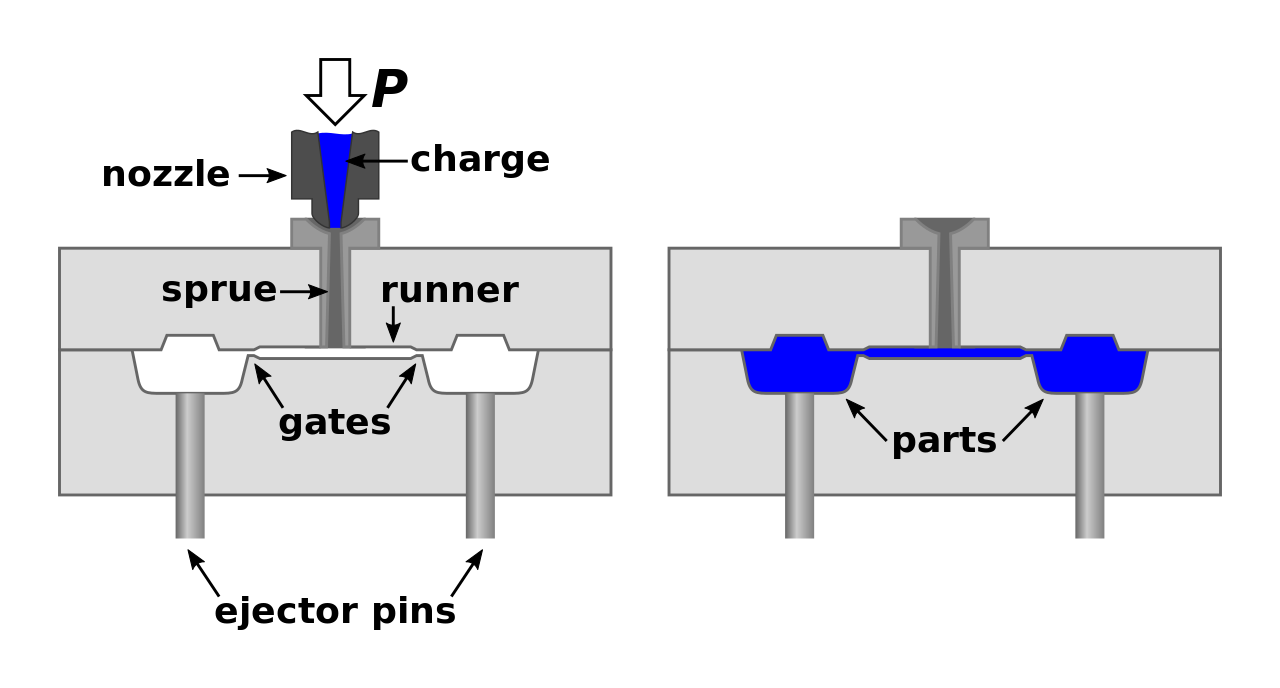
At its heart, injection moulding involves melting a plastic material and forcing it under high pressure into a cooled, custom-made mould cavity. The molten plastic fills every nook and cranny of the mould, replicating its internal geometry with astonishing fidelity. Once the plastic solidifies, the mould opens, and the finished part is ejected. This cycle repeats, often thousands or even millions of times, making it ideal for consistent, high-volume production runs of thermoplastic polymers and thermosetting polymers.
🛠️ Mould Design & Materials
The mould itself is a critical component, typically crafted from hardened steel or aluminum by specialized mould makers. These moulds are precision-engineered to the exact specifications of the desired part, incorporating features like gates, runners, and cooling channels. The choice of mould material and design directly impacts part quality, cycle time, and the longevity of the mould itself. Advances in 3D printing are also enabling the creation of simpler, lower-cost moulds for prototyping and low-volume runs, particularly with lower-temperature thermoplastics.
📈 Applications & Industries
The versatility of injection moulding means it underpins a vast array of industries. From consumer electronics and medical devices to automotive components and packaging, the process is ubiquitous. Think of the plastic casing on your smartphone, the intricate gears in a toy, or the lightweight interior panels in a car – all likely products of injection moulding. Its ability to produce complex geometries with tight tolerances makes it a go-to for high-precision applications requiring high-volume manufacturing.
💡 Innovations & Future Trends
The field of injection moulding is far from static. Innovations are constantly pushing the boundaries, with advancements in robotics and automation streamlining production. Smart moulds equipped with sensors monitor process parameters in real-time, enhancing quality control. Furthermore, the development of new advanced polymer materials with enhanced properties like conductivity or biodegradability is expanding the application scope of injection moulding into new frontiers.
⚖️ Pros and Cons: A Balanced View
The advantages of injection moulding are compelling: exceptional precision, high production rates, and the ability to create complex shapes in a single step. It's incredibly cost-effective for large volumes, as the per-part cost drops significantly with scale. However, the upfront investment in mould design and tooling can be substantial, making it less economical for very small runs. Material waste can also be a concern if not managed efficiently, though recycling and regrinding of scrap are common practices.
💰 Cost Factors & Considerations
The cost of injection moulding is influenced by several factors. The complexity and size of the part, the type of plastic resin used, and the required production volume all play significant roles. Tooling costs, which can range from a few thousand to hundreds of thousands of dollars, are a major initial expense. Cycle times – how long each part takes to produce – also impact overall cost, with faster cycles generally leading to lower per-unit prices. Contract manufacturers often provide detailed quotes based on these variables.
❓ Frequently Asked Questions
Injection moulding is a cornerstone of modern manufacturing, but its intricacies can be daunting. Understanding the process, the materials, and the economic considerations is key to successful implementation. Whether you're a product designer, an engineer, or a business owner looking to bring a plastic product to market, a solid grasp of plastic injection moulding principles will be your greatest asset.
Key Facts
- Year
- 1946
- Origin
- The first commercial injection moulding machine was developed by Arthur E. Richter for the Fellows Gear Shaper Company in Springfield, Vermont, USA.
- Category
- Manufacturing & Industrial Processes
- Type
- Process
Frequently Asked Questions
What is the difference between thermoplastic and thermosetting polymers in injection moulding?
Thermoplastics can be repeatedly melted and reshaped; they are heated until molten, injected, and then cooled. Examples include polyethylene and ABS. Thermosets, however, undergo an irreversible chemical change when heated, curing into a permanent shape. Once set, they cannot be re-melted. Examples include epoxy resins and vulcanized rubber. This fundamental difference dictates their processing methods and applications in injection moulding.
How long does it take to design and produce an injection mould?
The timeline for mould creation varies significantly based on complexity, size, and material. Simple moulds for small parts might take a few weeks, while intricate, large moulds for automotive components can take several months. Design and simulation phases are crucial and can add to the overall lead time. Post-production, the actual injection moulding process itself is very fast, with cycle times often measured in seconds.
What are the typical minimum order quantities (MOQs) for injection moulding?
MOQs for injection moulding are generally high due to the significant upfront tooling costs. While some contract manufacturers might offer services for smaller batches, especially using 3D printed moulds, typical production runs often start in the thousands or tens of thousands of parts. The break-even point where per-part costs become competitive is usually reached at higher volumes.
Can injection moulding produce parts with very thin walls?
Yes, injection moulding is capable of producing parts with very thin walls, often down to fractions of a millimeter. However, achieving this requires careful mould design, precise control over injection pressure and speed, and appropriate material selection. Thin-walled parts can be challenging to fill completely and may be prone to warping if not processed correctly.
What quality control measures are common in injection moulding?
Quality control in injection moulding involves multiple stages. This includes rigorous inspection of the mould before production, real-time monitoring of process parameters like temperature, pressure, and cycle time during manufacturing, and post-production inspection of finished parts for dimensional accuracy, surface finish, and material defects. Statistical Process Control (SPC) is often employed to ensure consistency.
How does material selection impact the injection moulding process and final part?
The choice of plastic resin is paramount. Different polymers have varying melting points, viscosities, shrinkage rates, and mechanical properties. For instance, a high-temperature polymer like PEEK requires different processing conditions and mould materials than a low-temperature one like LDPE. Material selection directly influences the part's performance, durability, cost, and the feasibility of the injection moulding process itself.